Category: Uncategorized

  • Custom Leathercraft WORK GEAR 1579 20-Inch Open-Top Soft-Sided Tool Box: Features, Uses, and Practical Guide

    Custom Leathercraft WORK GEAR 1579 20-Inch Open-Top Soft-Sided Tool Box: Features, Uses, and Practical Guide

    Introduction

    A practical tool storage system does more than provide a place to put tools. For people who work with hand tools regularly, the way equipment is organized can influence how quickly individual tools can be found, transported, and returned to storage. This is especially true for electricians, maintenance workers, technicians, contractors, installers, and DIY users who may move between a workshop, vehicle, job site, and home.

    A soft-sided toolbox offers a different approach from a traditional metal or molded plastic tool case. Instead of creating a rigid enclosed compartment, it combines a central storage area with exterior pockets that can keep commonly used tools visible and accessible.

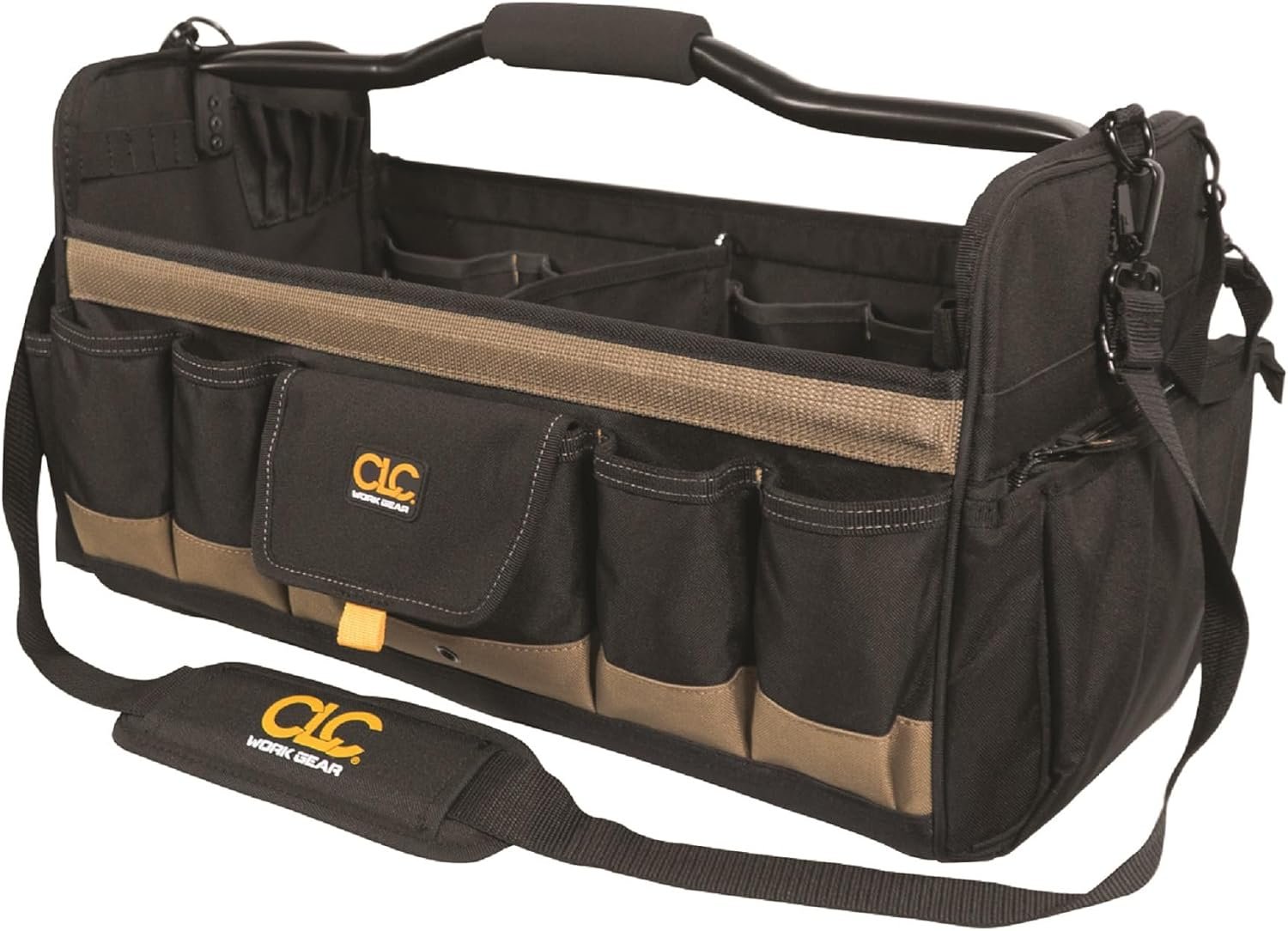
    The Custom Leathercraft WORK GEAR 1579 20-Inch Open Top Soft-Sided Tool Box is designed around this type of organization. The product is a 20-inch open-top tool bag with 27 pockets, providing a combination of central storage and external compartments for tools and accessories. It is part of the WORK GEAR range from Custom Leathercraft, a brand known for tool-storage products aimed at tradespeople and general users.

    The open-top format is particularly relevant for people who frequently access their tools throughout the day. Rather than opening and closing a hinged lid each time a tool is needed, the user can reach directly into the main compartment or select a tool from one of the outside pockets.

    At the same time, an open-top bag has limitations. It does not provide the same level of protection against dust, rain, or impact as a fully enclosed hard case. Its capacity also depends on how the user organizes the tools, and a heavily loaded bag can become difficult to carry.

    This guide explains the design and practical characteristics of the Custom Leathercraft 1579, how its pocket layout can be used, what types of users may find this format useful, and what to consider when comparing it with other toolbox categories.

    What Is the Custom Leathercraft WORK GEAR 1579?

    The WORK GEAR 1579 is a 20-inch soft-sided, open-top tool bag designed for transporting and organizing hand tools.

    Its defining characteristic is its combination of a large central compartment and numerous external pockets. The manufacturer describes the bag as having 27 pockets, giving users multiple locations for organizing different categories of equipment.

    Rather than requiring every tool to be placed into one large compartment, the pocket layout allows commonly used items to remain separated.

    For example, screwdrivers can be placed in dedicated vertical pockets, pliers can be kept in another section, and measuring equipment can be stored where it is easy to reach.

    This type of organization is different from a traditional toolbox with one large cavity and a removable tray.

    The 1579 is intended more as a portable work bag that keeps tools readily accessible throughout the workday.

    Key Features

    20-Inch Tool Bag Format

    The 1579 is built around a 20-inch size, making it larger than compact personal tool bags while remaining within the general category of portable hand-tool storage.

    A 20-inch bag can accommodate a substantial selection of hand tools, but the actual capacity depends heavily on the size and shape of the equipment being carried.

    A bag filled with lightweight screwdrivers and pliers will behave differently from one loaded with heavy wrenches, power tools, or large accessories.

    The size should therefore be viewed as an indication of the bag’s overall format rather than a guarantee of a specific number of tools it can carry.

    Open-Top Design

    The open-top design is one of the most practical features of the 1579.

    There is no conventional lid covering the main compartment. Instead, the user has direct access to the tools inside.

    This can be useful when a technician repeatedly switches between different tools.

    For example, during an installation job, the worker may need a screwdriver, pliers, measuring tape, fasteners, and a utility knife several times during the same task.

    An open bag eliminates the repeated step of opening and closing a rigid toolbox.

    The tradeoff is that the tools are more exposed to the surrounding environment and may be less protected during transportation.

    27 Pockets

    The toolbox provides 27 pockets for organizing tools and accessories.

    Multiple pockets can be useful because hand tools come in many shapes and sizes.

    Long narrow tools can be separated from smaller accessories, while frequently used items can be placed in the most accessible locations.

    This arrangement also provides visual organization. Instead of searching through a deep pile of tools, the user can often identify a tool by looking at its pocket.

    The pocket count is a structural feature rather than a recommendation that every pocket should be filled. Overloading all available pockets can make the bag heavier and may reduce the convenience of carrying it.

    Soft-Sided Construction

    Unlike a steel toolbox or molded plastic case, the WORK GEAR 1579 uses a flexible soft-sided construction.

    Soft-sided bags have several practical characteristics.

    They can conform slightly around tools and accessories, can be easier to store in vehicle compartments, and generally do not have the same rigid shape as a traditional toolbox.

    The flexibility can also make it easier to place the bag in a crowded work vehicle.

    However, soft-sided construction provides less structural protection than a hard case. Sharp tools should therefore be positioned carefully to avoid damaging the bag or surrounding equipment.

    Central Main Compartment

    The pockets provide organization around the outside, while the main compartment can accommodate larger tools or groups of equipment.

    This is useful for tools that do not fit neatly into narrow pockets.

    For example, a worker may keep a small level, electrical tester, gloves, fastener containers, or other larger accessories in the main section.

    The open compartment also allows the user to see the contents without opening a lid.

    Portable Tool Storage

    The basic purpose of the 1579 is mobility.

    A portable tool bag can move between a truck, workshop, construction site, maintenance area, and building interior.

    This makes it different from large rolling tool cabinets or stationary workshop storage.

    A worker can create a job-specific tool selection and carry it directly to the work area.

    How It Can Be Used

    Electrical Work

    Electricians frequently carry many relatively small hand tools.

    A soft-sided organizer can provide separate locations for screwdrivers, pliers, cutters, testers, measuring tools, and other equipment.

    The pockets can keep tools upright and visible.

    Electrical components should still be handled according to appropriate safety procedures, and the bag itself should not be treated as protection against electrical hazards.

    Plumbing and Maintenance

    Plumbers and maintenance technicians may need a mixture of hand tools, fittings, measuring equipment, and small accessories.

    A 20-inch open-top bag can provide a central location for the equipment needed for a particular service call.

    The exterior pockets can be assigned to frequently used tools, while the main compartment can hold larger equipment.

    Carpentry

    Carpenters often work with measuring and layout tools alongside hand tools.

    A tool bag can accommodate items such as tape measures, squares, screwdrivers, pliers, utility knives, and other accessories.

    The open design can make repeated access easier while working on a project.

    General Construction

    Construction workers may need to carry a changing selection of tools depending on the task.

    The 27-pocket configuration allows a user to create a personalized organization system.

    A worker can keep frequently used tools in exterior pockets and reserve the central compartment for larger items.

    Home Maintenance

    The bag can also be useful for homeowners who prefer to keep common household tools together.

    Rather than storing individual tools in different drawers, a dedicated tool bag can serve as a portable maintenance kit.

    This can be especially useful for users who work on multiple areas of a house and do not want to repeatedly return to a workshop.

    Automotive Maintenance

    A soft-sided tool bag can be useful for transporting hand tools around a garage or workshop.

    The pockets can hold frequently used tools while larger items remain in the main compartment.

    For automotive work, however, very heavy tools and metal components should be distributed carefully to avoid making the bag unnecessarily difficult to carry.

    Who May Find This Tool Bag Useful?

    Professional Tradespeople

    Electricians, plumbers, carpenters, installers, HVAC technicians, and maintenance workers often need portable tool storage.

    A bag with multiple pockets can provide a practical way to keep frequently used tools organized.

    Service Technicians

    Technicians moving between customer locations may prefer a portable bag over a large toolbox.

    The open-top design can also make it easier to access tools during service calls.

    Contractors

    Contractors can configure the bag around the specific requirements of a project.

    A worker handling one type of task can select the relevant tools and leave unrelated equipment in the workshop or vehicle.

    DIY Users

    Homeowners can use a tool bag to maintain a core set of household tools.

    A portable design makes it possible to carry the tools to different rooms or outdoor work areas.

    Workshop Users

    Even when most tools are stored in a larger cabinet, a portable tool bag can function as a secondary “job kit.”

    The user can select the tools needed for a specific task and carry them away from the main workstation.

    Organizing the 27 Pockets

    Having many pockets is useful only if they are organized deliberately.

    A simple system is to assign different tool categories to different areas.

    For example:

    • Screwdrivers in narrow vertical pockets
    • Pliers and cutters in adjacent pockets
    • Measuring tools in accessible outer pockets
    • Utility knives in secure locations
    • Gloves and protective equipment in the main compartment
    • Fastener containers in the central storage area
    • Frequently used tools closest to the carrying position

    The exact arrangement should reflect the user’s work.

    There is no universal pocket layout because electricians, carpenters, mechanics, and DIY users carry different tools.

    The most important goal is consistency.

    If every tool has a designated place, missing equipment becomes easier to notice.

    Open-Top vs. Closed Toolboxes

    One of the most significant decisions when choosing portable tool storage is whether to use an open or enclosed design.

    Open-Top Tool Bags

    An open-top bag provides direct access.

    The user can see the tools immediately and remove them without opening a lid.

    This can save small amounts of time throughout the day, particularly for jobs requiring frequent tool changes.

    The downside is exposure. Dust, moisture, debris, and other environmental factors can reach the tools more easily.

    Hard Tool Cases

    A hard case typically provides more protection from impact and environmental exposure.

    The contents are enclosed and may be easier to secure during transportation.

    However, accessing a tool requires opening the case, and the interior can become disorganized if there are few dedicated compartments.

    Traditional Metal Toolboxes

    Metal toolboxes provide rigid construction and are often used for general workshop storage.

    They can be durable, but they may also be heavier and less flexible than soft-sided bags.

    The choice depends on the work environment and the type of tools being transported.

    Comparison of General Tool Storage Categories

    Storage TypeAccessibilityProtectionPortabilityOrganization
    Open-top soft tool bagVery directModerateHighMultiple pockets
    Hard tool caseRequires openingHigherModerateDepends on interior design
    Metal toolboxRequires openingHighModerate to low depending on sizeTrays and compartments vary
    Rolling toolboxAccessible but largerHighEasy on suitable surfacesOften extensive
    Tool backpackDirect through compartmentsModerateHighMultiple internal sections

    This comparison is intended to show the general differences between storage formats rather than identify one category as universally preferable.

    Important Things to Consider

    Weight

    The empty bag may be easy to carry, but the weight of the tools can add up quickly.

    Twenty or more pockets can encourage users to carry more equipment than they actually need.

    A practical approach is to select tools based on the specific job rather than filling every available compartment.

    Tool Size

    Not every tool will fit conveniently into a pocket.

    Large adjustable wrenches, long levels, bulky pliers, and other oversized equipment may be better placed in the main compartment or carried separately.

    Before organizing the bag, it is useful to identify the tools that need dedicated pocket space.

    Soft-Sided Protection

    Soft-sided construction provides flexibility, but it does not provide the same impact protection as a rigid case.

    If the bag is placed in a truck bed or exposed to heavy equipment, the tools and bag should be secured appropriately.

    Sharp tools should also be positioned so they do not cut or puncture the material.

    Weather Exposure

    An open-top tool bag should not be assumed to be waterproof.

    If the bag is used outdoors, it should be protected from rain and excessive moisture whenever possible.

    Moisture can cause corrosion on metal tools and can affect other equipment stored inside.

    Security

    Because the bag is open at the top, it does not provide the same level of theft resistance as a locked toolbox.

    When working in public areas or leaving a vehicle unattended, valuable tools should be secured appropriately.

    Carrying Distance

    A heavily loaded 20-inch tool bag can become tiring to carry over long distances.

    If a job requires moving tools across a large site, a rolling tool case, backpack, cart, or other transport solution may be more appropriate.

    Maintaining a Soft-Sided Tool Bag

    Tool bags generally require less mechanical maintenance than powered equipment, but regular care can still extend their useful life.

    Clean the Interior

    Dust, metal filings, sawdust, and other debris can accumulate inside the bag.

    Emptying and cleaning the interior periodically can prevent debris from damaging the material or tools.

    Inspect the Pockets

    Pockets experience repeated stress when tools are inserted and removed.

    Check seams, edges, and pocket bottoms for signs of wear.

    Inspect the Handles

    The carrying handle supports the entire loaded weight of the bag.

    Inspect it periodically for fraying, loose stitching, or other damage.

    Avoid Excessive Loading

    Even if the bag physically accepts more tools, overloading can place unnecessary stress on the seams and handles.

    A lighter, job-specific load is often easier to carry and organize.

    Keep Tools Clean

    A toolbox can become dirty when tools are returned immediately after use.

    Cleaning tools before storing them helps keep the bag cleaner and reduces the transfer of grease, dirt, and metal debris to other equipment.

    Creating a Job-Specific Tool Kit

    One useful way to use a multi-pocket tool bag is to create dedicated tool configurations.

    For example, a homeowner could create a basic household-maintenance kit.

    An electrician could organize a bag around electrical installation tasks.

    A carpenter could dedicate one to layout and finishing work.

    A service technician might create a bag specifically for routine diagnostic visits.

    This approach avoids carrying every tool available.

    It also makes it easier to identify missing tools before leaving the workshop.

    Tool Visibility and Workflow

    One advantage of multiple external pockets is visibility.

    A worker can often identify whether a screwdriver or pair of pliers is present without searching through a closed compartment.

    This can be useful during tasks where tools are frequently exchanged.

    The organizational system works best when the same tools are returned to the same locations.

    If a screwdriver normally belongs in one pocket but is repeatedly placed in the main compartment, the advantage of the pocket system is reduced.

    A consistent workflow therefore matters as much as the physical design of the bag.

    Using the Main Compartment Effectively

    The central compartment should generally be reserved for items that are too large for the pockets or that do not need to be accessed as frequently.

    For example, it might hold:

    • Gloves
    • Small tool cases
    • Electrical accessories
    • Fastener containers
    • Larger hand tools
    • Measuring equipment
    • Protective equipment

    Avoid filling the central compartment with loose small items when a separate container can keep them organized.

    A small collection of loose fasteners can quickly make a tool bag difficult to search.

    Frequently Asked Questions

    What size is the Custom Leathercraft WORK GEAR 1579?

    The model is identified as a 20-inch tool bag. The 20-inch designation refers to the bag’s overall size category rather than the capacity of any individual pocket.

    How many pockets does the 1579 have?

    The product is designed with 27 pockets, providing multiple locations for organizing hand tools and accessories.

    Is the 1579 an open-top tool bag?

    Yes. It uses an open-top design that provides direct access to the main compartment.

    What types of tools can be stored in it?

    The bag can be used for many common hand tools, including screwdrivers, pliers, cutters, measuring tools, utility knives, and other equipment that fits within the available pockets or main compartment.

    Is the bag suitable for electricians?

    A multi-pocket open-top design can be useful for electricians who carry numerous small hand tools.

    The exact tool selection depends on the work being performed.

    Can plumbers use this tool bag?

    Yes, a tool bag of this type can be used to organize many plumbing hand tools and accessories.

    Larger or particularly heavy equipment may be better transported separately.

    Is it suitable for automotive tools?

    It can be used for transporting automotive hand tools, particularly for mobile maintenance tasks.

    Users should consider the weight of automotive tools because a fully loaded bag can become difficult to carry.

    Is the tool bag waterproof?

    An open-top soft-sided tool bag should not be assumed to be waterproof.

    It is better suited to environments where the contents can be protected from significant rain and moisture.

    Can the bag be used outdoors?

    Yes, it can be carried to outdoor job sites, but exposure to rain, mud, dust, and other environmental conditions should be considered.

    The tools themselves should also be protected against corrosion and moisture.

    Does an open-top design provide better access?

    It can provide direct access because the user does not have to open a lid before reaching the tools.

    This can be useful when a worker repeatedly changes tools during a task.

    Is the bag suitable for heavy tools?

    The bag can carry tools, but the total load should be kept practical for the carrying system and the user’s ability to transport it safely.

    Heavy tools can make a soft-sided bag cumbersome.

    Does having 27 pockets mean every tool needs its own pocket?

    No. The pockets are organizational options.

    The main compartment can be used for larger items, while the exterior pockets can be assigned to frequently used tools.

    Can it replace a workshop toolbox?

    It can serve as portable storage, but it does not necessarily replace a larger workshop toolbox.

    A stationary toolbox typically provides more overall capacity and greater protection.

    How should tools be organized?

    A useful approach is to place frequently used tools in the most accessible pockets and reserve the main compartment for larger items.

    The exact layout should reflect the user’s work.

    How can the bag be kept in good condition?

    Keep the bag reasonably clean, inspect handles and seams, avoid excessive loading, and protect it from unnecessary moisture and harsh environmental exposure.

    What should be done if a pocket becomes damaged?

    A damaged pocket should be assessed before continuing to store tools in it.

    If a tool could fall through or the damage could spread, repair or replacement may be appropriate.

    Conclusion

    The Custom Leathercraft WORK GEAR 1579 20-Inch Open-Top Soft-Sided Tool Box is designed around a straightforward idea: provide portable tool storage that keeps frequently used equipment organized and accessible.

    Its 20-inch format, open-top main compartment, and 27-pocket configuration give users multiple ways to arrange hand tools and accessories. Instead of placing everything into one deep compartment, a worker can assign individual pockets to commonly used tools while using the central section for larger equipment.

    This design can be useful across many environments, including electrical work, plumbing, carpentry, general construction, maintenance, automotive work, and household projects. Professional tradespeople can configure it as a job-specific kit, while homeowners can use it as a portable household maintenance bag.

    The open-top construction is one of its defining characteristics. It provides quick access and excellent visibility, but it also means the tools are more exposed than they would be inside a closed hard case. Users working outdoors should take appropriate precautions against rain and moisture, while anyone transporting valuable tools should consider the bag’s limited security compared with a locking toolbox.

    Weight is another important consideration. Twenty-seven pockets provide plenty of organizational possibilities, but that does not mean every pocket needs to be filled. Carrying only the tools required for a particular task can make the bag easier to transport and reduce unnecessary stress on its handles, seams, and pocket construction.

    Compared with hard cases, metal toolboxes, rolling storage systems, and tool backpacks, a soft-sided open-top bag occupies a distinct position. Its main strengths as a category are direct access, portability, and flexible organization. Its limitations include lower environmental protection and less rigid structural protection than enclosed cases.

    For anyone considering this type of portable tool storage, the most useful question is not simply how many tools the bag can hold, but how well its organization matches the work being performed. A carefully arranged tool bag can make a mobile job kit easier to transport, easier to inspect, and easier to access throughout the day.

    If the 20-inch format and 27-pocket organization match your tool-storage needs,

    you can check more details on Amazon here.

    As an Amazon Associate, we earn from qualifying purchases.
  • 100% Silicone Baby Feeding Set: A Practical Guide to Baby Dishes, Utensils, and Mealtime Organization

    100% Silicone Baby Feeding Set: A Practical Guide to Baby Dishes, Utensils, and Mealtime Organization

    Introduction

    Introducing a baby to independent eating is a gradual process. During this stage, mealtimes become an opportunity for children to explore different foods, practice handling utensils, and become familiar with drinking from cups. For parents and caregivers, the challenge is often finding feeding equipment that is practical, easy to organize, and suitable for the realities of a young child’s developing coordination.

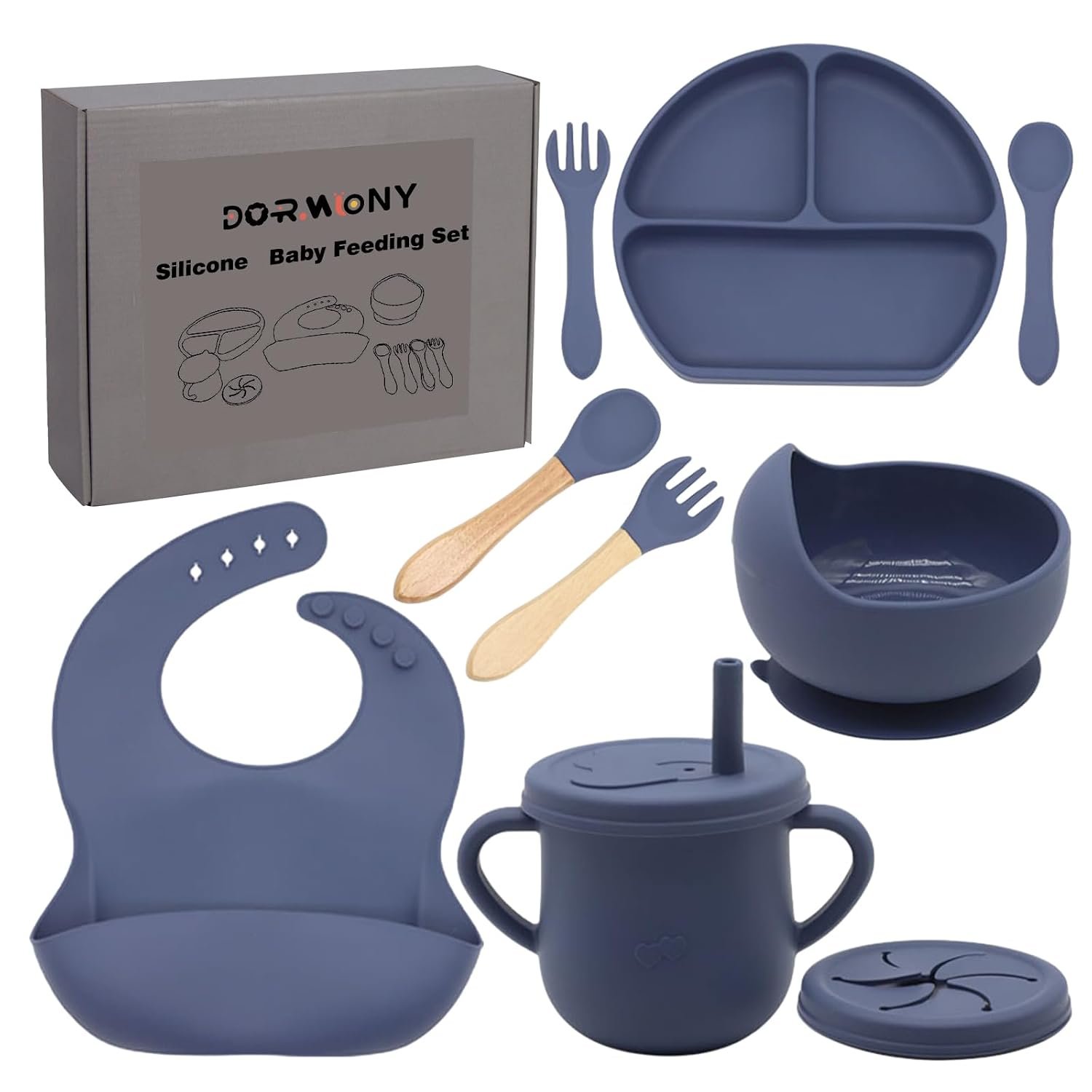
    The 100% Silicone Baby Feeding Set from Dormlony is designed as an all-in-one mealtime collection for babies and toddlers. The set is described as including a suction bowl, divided plate, spoons, forks, a sippy cup, and a bib, with the components made from food-contact silicone according to the product listing. The color featured in the product title is Navy Blue.

    An integrated feeding set can be useful because it brings several everyday items together rather than requiring parents to purchase each component separately. At the same time, each item serves a different purpose. A suction bowl is designed around stability, a divided plate provides separate sections for different foods, utensils support self-feeding practice, a cup introduces another drinking format, and a bib helps contain some of the mess that naturally accompanies early eating.

    Silicone is commonly used in baby feeding products because it is flexible, relatively durable, and can tolerate a range of everyday temperatures. However, material alone does not determine whether a feeding product is appropriate for a particular child. Parents should consider age guidance, supervision, cleaning requirements, food temperature, utensil size, and the child’s individual developmental stage.

    This guide explores the main characteristics of this type of silicone baby feeding set, practical ways it can be incorporated into mealtimes, what parents should consider before using it, and how silicone feeding sets compare with other common baby dish materials.

    Key Features

    Silicone Construction

    The product is presented as a 100% silicone baby feeding set. Silicone is a flexible material that is widely used in food-contact products, including baby plates, bowls, utensils, cups, and storage containers.

    Its flexibility can be useful during early feeding because silicone dishes are generally less rigid than ceramic or glass alternatives. A silicone plate or bowl can also be more forgiving when a young child drops or pushes it around the table.

    The product listing describes the set as BPA-free as well.

    Parents should still follow the manufacturer’s instructions regarding cleaning, temperature limits, and intended use. “Silicone” is a material description rather than a guarantee that every component is appropriate for every heating or cooking method.

    Suction Bowl

    The feeding set includes a suction bowl.

    A suction base is designed to help keep the bowl in place on a compatible smooth surface. This feature can be particularly relevant during the transition from parent-assisted feeding to self-feeding, when a child may naturally push, pull, or move dishes while exploring food.

    A suction feature does not mean the bowl can never be moved. Its effectiveness depends on the surface, cleanliness, moisture, the strength of the seal, and the child’s actions.

    For that reason, parents should still supervise mealtimes rather than relying on the suction base as a restraint.

    Divided Plate

    The set also includes a divided plate.

    Divided plates separate foods into different sections, which can be useful when a child is being introduced to several foods during one meal.

    For example, a parent might place a carbohydrate-based food in one section, vegetables in another, and fruit or another suitable food in a third.

    The practical advantage is organization. Different foods can remain visually separate instead of becoming mixed together immediately.

    This can also make portioning and meal presentation easier for caregivers.

    Baby Spoons

    Spoons are included for feeding and self-feeding.

    A baby spoon typically has a smaller head and handle than standard adult cutlery. This format can make it easier for a young child to practice bringing food toward the mouth.

    Self-feeding is a skill that develops gradually. At first, a child may grip the spoon with an entire hand rather than using a mature utensil grip. Spilling is normal during this stage.

    The purpose of an appropriately sized spoon is therefore not simply to deliver food efficiently but also to give a child an opportunity to practice coordination.

    Forks

    The inclusion of forks adds another utensil for developing feeding skills.

    A toddler learning to use a fork has to coordinate several actions: holding the utensil, positioning the tines, picking up food, and bringing it toward the mouth.

    Parents should choose foods that are appropriate for the child’s developmental stage and prepare them into safe sizes and textures.

    The presence of a small fork in a feeding set does not eliminate the need for adult supervision.

    Sippy Cup

    The set includes a sippy cup, providing a dedicated drinking component.

    Transitioning from bottle or breastfeeding to cups can happen gradually and differently for every child. A sippy cup can be one option among several types of training cups.

    The cup should be introduced according to the child’s developmental readiness and used according to the manufacturer’s instructions.

    It is also important to clean and dry the cup thoroughly, particularly around any lid, valve, or drinking opening where liquid residue can remain.

    Bib

    The set includes a bib intended to help protect clothing during meals.

    Early self-feeding can be messy. Food can fall from utensils, spill from cups, or simply end up on a child’s hands and face while they explore textures.

    A bib can reduce the amount of food that reaches clothing, although it cannot eliminate mealtime mess entirely.

    The bib should be used comfortably and should not interfere with a child’s movement, breathing, or normal activity.

    How It Can Be Used

    Introducing Self-Feeding

    One of the main purposes of a toddler feeding set is supporting the transition toward more independent eating.

    At the beginning, parents may still provide most of the food directly. Over time, the child can be given opportunities to hold a spoon or fork and attempt to feed themselves.

    A silicone feeding set can provide the necessary basic equipment in one place.

    The process does not need to be rushed. Children develop feeding skills at different rates, and early attempts can be messy.

    Serving Mixed Meals

    The divided plate can be useful for meals that contain several components.

    Instead of placing everything in a single bowl, caregivers can separate foods into sections.

    This can make the meal easier to organize and may help children visually identify different foods.

    For example, a meal could include soft cooked vegetables, appropriately prepared grains or pasta, and pieces of another suitable food.

    The exact foods and preparation methods should always reflect the child’s age and developmental stage.

    Bowl-Based Foods

    The suction bowl can be useful for foods that are easier to serve from a bowl.

    Depending on the child’s stage of feeding, this could include appropriately prepared oatmeal, yogurt, mashed foods, soft grains, or other suitable textures.

    The suction base can help reduce accidental movement of the bowl on a compatible surface.

    Practicing With Utensils

    A child does not need to master spoon and fork use immediately.

    Parents can introduce one utensil at a time and allow the child to explore how it works.

    A spoon may be easier for some foods, while a fork may work better for soft pieces that can be pierced safely.

    The goal is gradual practice rather than perfect table manners.

    Learning to Drink From a Cup

    The included sippy cup provides another opportunity to practice drinking independently.

    Some children transition between cup types quickly, while others take longer.

    Parents can introduce the cup during meals and monitor how the child handles it.

    The cup should be cleaned promptly after use, particularly when it contains milk or other perishable liquids.

    Who May Find This Type of Feeding Set Useful?

    Parents Introducing Solid Foods

    Parents moving into the complementary-feeding stage may appreciate having several basic feeding items together.

    A bowl, plate, utensils, cup, and bib cover several common aspects of mealtime.

    Toddlers Practicing Independent Eating

    The set’s combination of utensils and dishes can be useful for children who are beginning to take a more active role in feeding themselves.

    The child can gradually move from parent-assisted feeding toward holding utensils and managing food independently.

    Families Looking for Coordinated Feeding Items

    A coordinated set can simplify organization.

    Instead of keeping unrelated plates, bowls, spoons, and cups in different locations, caregivers can keep the feeding components together.

    Grandparents and Other Caregivers

    Multiple caregivers can benefit from having a dedicated set of feeding equipment.

    A clearly defined set can help maintain consistency when different adults are responsible for mealtimes.

    Families Building a Toddler Mealtime Routine

    A predictable feeding setup can become part of a daily routine.

    For example, the same bowl and cup can be used during breakfast, while the divided plate can be used for lunch or dinner.

    The equipment itself does not establish a routine, but having consistent items can make the routine easier to organize.

    Important Things to Consider

    Check the Recommended Age

    Parents should always check the manufacturer’s recommended age range before using a baby feeding product.

    Children develop at different rates, and a product that is appropriate for one toddler may not be appropriate for a younger child.

    The size and shape of utensils, drinking components, and dish edges should all be considered alongside the child’s developmental abilities.

    Supervision Is Important

    Feeding equipment does not replace supervision.

    Young children can choke on food, misuse utensils, spill liquids, or place objects in their mouths in unexpected ways.

    Parents and caregivers should remain attentive during meals and prepare foods according to recognized age-appropriate feeding and choking-prevention guidance.

    Suction Does Not Mean Permanently Fixed

    A suction bowl or plate can move if the seal is broken.

    The surface underneath should be clean and compatible with the suction base.

    Parents should also understand that children may eventually discover how to lift the dish.

    The feature should therefore be treated as a convenience rather than a guarantee against spills.

    Consider Food Temperature

    Silicone can tolerate a range of temperatures, but individual products have specific temperature limits.

    Parents should consult the manufacturer’s instructions before putting the dishes into an oven, microwave, dishwasher, freezer, or other appliance.

    Even if the material itself can tolerate heat, the complete product may contain components with different requirements.

    Food should also be checked for safe temperature before being given to a child.

    Cleaning Matters

    Baby feeding products require thorough cleaning.

    Food residue can remain around plate sections, bowl edges, utensil joints, cup openings, or other areas.

    The manufacturer’s cleaning instructions should be followed.

    After washing, components should be allowed to dry thoroughly before being stored.

    Avoid Assuming “BPA-Free” Means Completely Risk-Free

    The product is marketed as BPA-free, which addresses a specific chemical associated with certain plastics.

    However, BPA-free is not a general guarantee of safety for every possible use.

    Parents should follow the manufacturer’s instructions and use food-contact products as intended.

    Check for Damage

    Silicone is flexible, but it is not indestructible.

    Inspect dishes, utensils, cups, and other components periodically for cuts, tears, cracks, unusual changes, or other damage.

    Damaged feeding equipment should be replaced rather than continuing to use it.

    Silicone vs. Other Baby Dish Materials

    Parents have several material choices when selecting baby feeding equipment.

    Silicone

    Silicone feeding products are flexible, relatively lightweight, and commonly designed for repeated household use.

    They are available in bowls, plates, bibs, utensils, cups, and other feeding accessories.

    The flexibility can make silicone dishes easier to handle and less prone to shattering than glass.

    Plastic

    Plastic baby dishes are also widely available.

    They can be lightweight and inexpensive, but the characteristics vary considerably depending on the plastic type and product construction.

    Parents should look for clear material information and follow the manufacturer’s instructions for heating and cleaning.

    Stainless Steel

    Stainless steel dishes are durable and can be resistant to staining and odors.

    They are generally more rigid than silicone and can produce more noise when dropped or moved.

    Glass

    Glass offers a rigid food-contact surface and is easy to inspect visually.

    Its primary practical drawback for toddler use is that it can break if dropped.

    Bamboo and Composite Materials

    Some feeding products use bamboo, wood, or composite materials.

    These can have different care requirements, particularly regarding prolonged soaking, dishwasher use, and drying.

    The appropriate material depends on the family’s preferences, the child’s age, and how the dishes will be used.

    Comparison of General Baby Feeding Set Categories

    Feeding Set CategoryTypical CharacteristicsPotential AdvantagesMain Considerations
    Silicone setFlexible, lightweight, soft-touch feelVersatile and easy to handleFollow temperature and cleaning instructions
    Plastic setLightweight and widely availableOften simple to storeMaterial and heat limitations vary
    Stainless-steel setRigid and durableResistant to staining and odorsLess flexible and can be noisy
    Glass setRigid, smooth surfaceEasy to inspect and cleanBreakage risk
    Mixed-material setCombines several materialsCan provide specialized componentsDifferent components may have different care requirements

    No material is automatically appropriate for every family. The best choice depends on the child’s stage, the caregiver’s preferences, cleaning routine, and intended use.

    Organizing the Feeding Set at Home

    Keeping feeding equipment organized can make mealtimes easier.

    One approach is to store the complete set together in a dedicated drawer or cabinet.

    For example, the divided plate and bowl can be stacked, utensils can be placed in a small container, and the cup can be stored separately so it can dry completely.

    The bib should also be stored clean and dry.

    Keeping everything together can be particularly useful for busy families because the necessary items can be collected quickly before a meal.

    Introducing Different Utensils Gradually

    Children may not immediately understand the purpose of every utensil.

    A simple progression can involve introducing one utensil at a time.

    A spoon can be offered with foods that naturally adhere to it. Once the child becomes more comfortable holding a spoon, a fork can be introduced with suitable soft foods.

    There is no requirement for every meal to involve both utensils.

    The purpose is to give the child repeated opportunities to practice.

    Parents can also use their own utensils during meals as a model. Children often learn by observing how adults handle eating equipment.

    Using Divided Plates for Meal Variety

    A divided plate can make it easier to serve several foods at once.

    For example, a caregiver could place:

    • A suitable grain or starch in one section
    • Soft vegetables in another
    • Fruit or another appropriate food in the third

    The sections can also help prevent foods with different textures from becoming mixed together.

    Some children prefer foods to remain separate, while others do not mind mixed foods.

    The divided design simply provides an organizational option.

    Cleaning a Silicone Feeding Set

    Silicone is generally straightforward to clean, but good hygiene still requires attention.

    After each meal, remove leftover food rather than allowing it to remain on the surface for extended periods.

    Wash the components using the method recommended by the manufacturer.

    Pay particular attention to:

    • Bowl edges
    • Plate dividers
    • Spoon surfaces
    • Fork tines
    • Cup openings
    • Any cup components or seals
    • Areas around the suction base
    • Bib surfaces and fastening areas

    After cleaning, allow the pieces to dry completely.

    If a component develops an unusual odor that does not disappear with normal cleaning, inspect it and consult the manufacturer’s care instructions.

    Sippy Cup Considerations

    The included cup deserves particular attention because cups can have more components than a simple plate or bowl.

    Liquid can remain around lids, openings, valves, or seals.

    If the design includes removable components, they should be disassembled and cleaned according to the manufacturer’s instructions.

    Milk and other liquids can spoil when left at room temperature for extended periods.

    The cup should therefore be emptied and cleaned promptly after use.

    As a child develops, caregivers can also discuss with a pediatric professional when and how to transition from a sippy cup to an open cup or another age-appropriate drinking method.

    Bib Use During Self-Feeding

    A bib can be especially useful during the early self-feeding stage.

    Children often touch food before eating it, drop pieces, wipe their hands, and experiment with different textures.

    The bib helps keep some of this food away from clothing.

    It is still important to check the fit. The bib should not be overly tight or interfere with the child’s natural movement.

    After meals, the bib should be cleaned according to its material and care instructions.

    Frequently Asked Questions

    What is included in this baby feeding set?

    The product listing describes a set that includes a suction bowl, divided plate, spoons, forks, a sippy cup, and a bib. The product is presented in a Navy Blue color.

    Is the feeding set made from silicone?

    The product is marketed as a 100% silicone baby feeding set. The listing also describes it as BPA-free.

    Does the set include a suction bowl?

    Yes. A suction bowl is one of the components described in the product listing.

    What is the purpose of the suction base?

    The suction base is designed to help keep the bowl in place on a compatible smooth surface.

    It can reduce unwanted movement, but it should not be considered impossible for a determined toddler to lift or move.

    Does the set include a divided plate?

    Yes. The feeding set includes a divided plate designed to separate different foods into sections.

    Does it include baby utensils?

    Yes. The set includes spoons and forks intended for baby or toddler mealtime use.

    Is a cup included?

    Yes. The product listing identifies a sippy cup as part of the set.

    Does the set include a bib?

    Yes. A bib is included as part of the feeding set.

    Is the feeding set dishwasher safe?

    The appropriate cleaning method should be confirmed using the manufacturer’s current care instructions for the specific product.

    Even when silicone components are dishwasher compatible, cup parts or other accessories may have separate cleaning requirements.

    Can silicone baby dishes be used in the microwave?

    Parents should not assume that every silicone feeding product is microwave-safe simply because it is made from silicone.

    Check the manufacturer’s instructions for the specific product and component before microwave use.

    Can the suction bowl prevent spills completely?

    No. Suction can help reduce movement on compatible surfaces, but it does not guarantee that a toddler cannot move, lift, or tip the bowl.

    Adult supervision remains important.

    Can the feeding set be used for hot food?

    Silicone products can tolerate heat within specified limits, but the manufacturer’s temperature instructions should be followed.

    Food should also be cooled to a safe temperature before being offered to a baby or toddler.

    Is the set suitable for babies and toddlers?

    The product is marketed as a baby and toddler feeding set.

    Parents should still check the manufacturer’s recommended age and consider the individual child’s developmental readiness before using each component.

    Is silicone safer than plastic?

    The answer depends on the specific material, manufacturing standards, and intended use.

    Silicone and plastic are broad material categories. A feeding product should be evaluated based on its stated composition, intended use, care instructions, and applicable safety information rather than material name alone.

    How should the utensils be introduced?

    Utensils can be introduced gradually during supervised meals.

    A child can begin by holding a spoon and experimenting with bringing it toward the mouth. Forks can be introduced with suitable foods as coordination develops.

    Why use a divided plate?

    A divided plate separates different foods into sections.

    This can make meals easier to organize and can be useful for children who prefer foods to remain separate.

    How should the sippy cup be cleaned?

    Follow the manufacturer’s cleaning instructions and pay particular attention to any lid, drinking opening, valve, or seal where liquid can remain.

    Thorough drying is also important.

    What should parents do if a silicone component becomes damaged?

    If a feeding component develops a tear, crack, cut, significant deformation, or another defect that could affect safe use, it should generally be replaced.

    Conclusion

    The 100% Silicone Baby Feeding Set from Dormlony brings several everyday feeding accessories together in one coordinated collection. The product listing describes a suction bowl, divided plate, spoons, forks, sippy cup, and bib, with the set marketed as BPA-free and made from silicone.

    Each component serves a different role during the transition toward more independent eating. The suction bowl is intended to reduce unwanted movement on a compatible surface, the divided plate separates foods, utensils provide opportunities to practice self-feeding, the cup supports drinking practice, and the bib helps manage some of the mess associated with early meals.

    Silicone is a practical material for many baby feeding applications because of its flexibility and everyday durability, but the material itself does not eliminate the need for proper care. Parents should follow the manufacturer’s instructions regarding temperature, cleaning, dishwasher or microwave use, and storage.

    The most important consideration is the child’s developmental stage. A feeding set can provide useful equipment, but children still need appropriate food preparation, close supervision, and gradual opportunities to develop their feeding skills. Features such as suction bases and small utensils are helpful tools rather than replacements for attentive caregiving.

    Compared with plastic, stainless steel, glass, and mixed-material feeding sets, silicone provides a different combination of flexibility, handling characteristics, and maintenance requirements. The right choice depends on how the family plans to use the dishes, how frequently they will be cleaned, and which features are most useful for the child’s current stage.

    For families looking for a coordinated collection of baby feeding dishes and accessories, the set provides several commonly used mealtime items in one package.

    You can check more details on Amazon here.

    As an Amazon Associate, we earn from qualifying purchases.
  • Buyers Products ATVS100 100 lb ATV Rear Rack Mount Broadcast Spreader: Features, Uses, and Practical Guide

    Buyers Products ATVS100 100 lb ATV Rear Rack Mount Broadcast Spreader: Features, Uses, and Practical Guide

    Introduction

    An all-terrain vehicle can be useful for much more than transportation. On farms, large properties, hunting land, landscaping jobs, grounds-maintenance operations, and winter service work, an ATV can become a practical mobile platform for distributing materials across areas that would be difficult to cover efficiently by hand.

    A broadcast spreader mounted to an ATV takes advantage of that mobility. Instead of carrying a handheld spreader or repeatedly walking back to a supply pile, an operator can transport a larger quantity of free-flowing material and distribute it while traveling across the property.

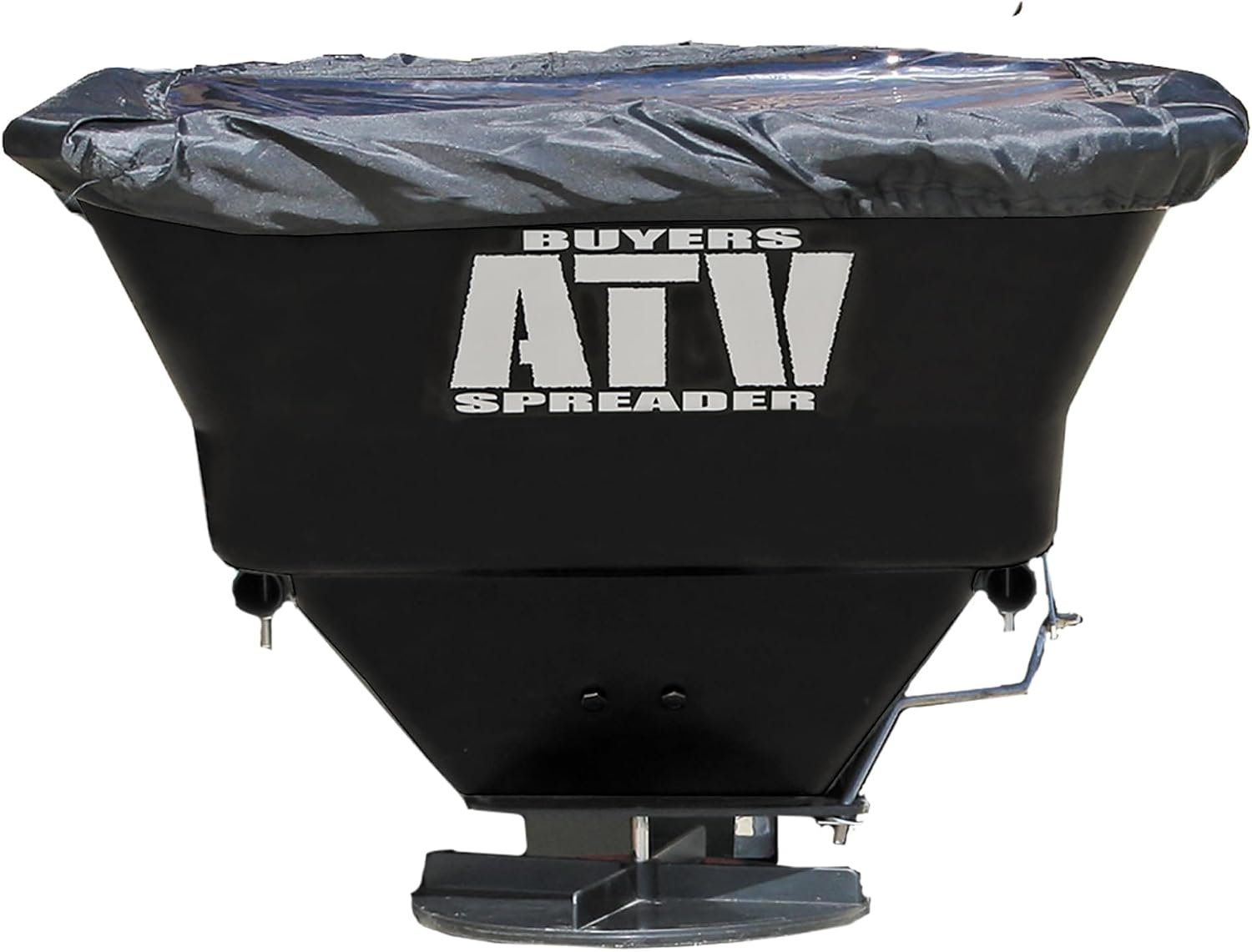
    The Buyers Products ATVS100 100 lb ATV Rear Rack Mount Broadcast Spreader is designed around this concept. It uses a polyethylene hopper with a stated 100-pound capacity, a 12-volt motor, a manual feed-gate regulator, and a broadcast distribution system. Buyers Products describes the ATVS100 as an all-purpose ATV spreader intended for applications including landscaping, groundskeeping, farming, and hunting. It can distribute free-flowing materials such as seed, feed, and many fertilizers, while the manufacturer also describes seasonal applications involving salt and ice melt.

    Published specifications identify a maximum spread width of up to 30 feet, although actual coverage depends on the material, application settings, travel speed, environmental conditions, and other factors.

    The ATVS100 is therefore not simply a fertilizer spreader. Its design is aimed at providing a versatile material-distribution system that can be attached to an ATV’s rear utility rack and used for different types of seasonal work.

    This guide explains the product’s main characteristics, how an ATV broadcast spreader works, practical applications, material considerations, installation factors, maintenance, and the differences between several general categories of spreading equipment.

    What Is the Buyers Products ATVS100?

    The ATVS100 is an ATV-mounted broadcast spreader with a horizontal rack-mount configuration.

    Rather than being towed behind the ATV, the spreader is mounted to the vehicle’s rear utility rack. Buyers Products states that the spreader mounts directly to an existing rear utility rack and is intended for ATVs equipped with a suitable rear metal rack.

    The hopper holds up to 100 pounds of free-flowing material. A 12-volt motor powers the spreading mechanism, while a manual feed-gate regulator controls the amount of material being released. The controls are designed to be accessible from the ATV seat.

    The result is a setup in which one vehicle can transport and distribute material across a property without requiring a separate walk-behind spreader for every task.

    Because the ATVS100 is designed for free-flowing material, the characteristics of the material being spread are important. Granules, seeds, feed, fertilizer, salt, and ice-melt products can have significantly different flow characteristics, so the correct setting and operating method can vary.

    Key Features

    100-Pound Hopper Capacity

    The ATVS100 has a stated hopper capacity of 100 pounds.

    For an ATV-mounted spreader, this provides a substantial material load while still keeping the equipment within a relatively compact form.

    The actual amount an operator should load depends on more than the hopper’s nominal capacity. The ATV itself has a maximum payload, and the weight of the spreader must be considered together with the material and any other equipment or cargo being carried.

    A full hopper therefore should not automatically be assumed to be appropriate for every ATV.

    Operators should consult the ATV manufacturer’s specifications before loading the spreader.

    Polyethylene Hopper

    The hopper is made from polyethylene, and Buyers Products describes it as durable and rust-resistant.

    Polyethylene is widely used in agricultural, landscaping, and material-handling equipment because it does not rust in the same manner as conventional steel.

    For a spreader that may be used with fertilizer, salt, or other potentially corrosive materials, the choice of hopper material can be particularly relevant.

    The hopper still requires appropriate cleaning and maintenance. Resistance to rust does not mean that the material is immune to chemical exposure, impact, ultraviolet degradation, or general wear.

    12-Volt Electric Motor

    The ATVS100 uses a 12-volt motor located inside the hopper. Buyers Products states that positioning the motor inside the hopper helps protect it during operation.

    The 12-volt electrical design allows the spreader to use the ATV’s electrical system rather than requiring a separate engine.

    A vehicle-powered spreader can simplify operation because the operator can control the equipment from the ATV while moving through the work area.

    Electrical connections should nevertheless be installed and maintained carefully, particularly when the ATV is used in wet, muddy, dusty, or corrosive environments.

    Manual Feed-Gate Regulation

    Material flow is controlled using a manual feed-gate regulator. Buyers Products describes the direct linkage as providing control over the amount of material being released.

    This is important because different materials require different application rates.

    A seed product, fertilizer, salt, and feed can behave differently inside the hopper. The operator may therefore need to adjust the gate according to the material and desired application.

    The setting should be calibrated rather than assumed.

    For example, an operator can conduct a small test application over a known distance or area and compare the amount of material used with the desired application rate.

    Broadcast Spreading

    The ATVS100 is designed as a broadcast spreader rather than a narrow-drop spreader.

    Broadcast spreading distributes material outward from the machine, allowing the ATV to cover a broader path as it travels.

    Buyers Products lists a spread width of up to 30 feet.

    The actual working width can be considerably different depending on the material and conditions.

    An advertised maximum width should therefore be treated as a specification rather than a guarantee that every material will consistently reach that distance.

    Rain Cover

    The spreader includes a rain cover designed to protect material in the hopper from the elements.

    This is particularly useful when the material is sensitive to moisture.

    Seeds, fertilizer granules, and some salt products can absorb moisture or develop flow problems if they become wet. Keeping the hopper covered when appropriate can help reduce unnecessary exposure.

    The cover does not eliminate the need for proper storage or guarantee that material will remain completely dry in all weather conditions.

    Rear Rack Mounting

    The ATVS100 mounts to an ATV’s rear utility rack. Buyers Products specifically describes the product as a horizontal rack-mount spreader.

    This configuration keeps the spreading equipment directly attached to the ATV rather than extending behind it like a tow-behind unit.

    That can be useful in tighter working environments where maneuverability matters.

    However, mounting equipment on the rear rack changes the ATV’s weight distribution and should always be considered in relation to the vehicle manufacturer’s recommendations.

    Controls Accessible From the Seat

    The power switch and controls are designed to be accessible while the operator remains seated on the ATV.

    This means the operator can control the spreading process without repeatedly stopping to operate a separate handheld mechanism.

    The practical advantage is particularly relevant when covering larger properties.

    How It Can Be Used

    Lawn Fertilization

    One of the most common applications for an ATV spreader is distributing granular fertilizer across lawns and larger grassy areas.

    The ATV provides mobility while the spreader handles the material distribution.

    Application rate is critical. Too little material may fail to provide the intended coverage, while excessive application can damage vegetation and waste product.

    Operators should follow the fertilizer manufacturer’s application instructions and calibrate the spreader accordingly.

    Grass and Pasture Seeding

    The ATVS100 can also be used for distributing suitable free-flowing seed. Buyers Products specifically identifies planting seeds as one of the warm-season applications for the spreader.

    Large fields and rough pasture areas can be easier to cover with an ATV than with a handheld broadcast spreader.

    Seed size, shape, moisture content, and density can all influence how it moves through the hopper and across the spinner.

    A calibration test can help establish the appropriate gate setting and travel speed.

    Livestock Feed

    Buyers Products identifies feed as another material that can be distributed with the ATVS100.

    This can be relevant on farms, ranches, hunting properties, and managed wildlife areas.

    Feed should only be used in the spreader when its physical characteristics are appropriate for the equipment.

    After switching between materials, the hopper and spreading components should be cleaned appropriately to avoid cross-contamination.

    Hunting and Wildlife Management

    The manufacturer lists hunting among the product’s intended application categories.

    On large properties, an ATV-mounted spreader can help distribute suitable wildlife feed or seed across designated areas.

    Local wildlife regulations and land-management requirements should always be followed when distributing feed or attractants.

    Winter Salt and Ice Melt

    The ATVS100 can also be used seasonally for distributing salt or ice melt. Buyers Products describes this as a winter application for driveways, parking areas, and sidewalks.

    This gives the spreader a broader seasonal role than equipment designed solely for lawn fertilizer.

    However, not every salt or de-icing material behaves identically. Moisture, particle size, density, and tendency to clump can influence flow through the hopper.

    Operators should verify that the specific material is suitable before loading it.

    Grounds Maintenance

    Large parks, estates, campuses, sports facilities, and commercial properties can require repeated material distribution.

    An ATV-mounted spreader can provide a mobile solution where a truck or tractor would be unnecessary or difficult to maneuver.

    The relatively compact vehicle combination can be useful for narrow access routes, rough terrain, and landscaped areas.

    Who May Find the ATVS100 Useful?

    Property Owners With Large Land Areas

    Owners of large rural properties may use an ATV for mowing, trail maintenance, fence inspection, and other tasks.

    Adding a spreader can extend the vehicle’s usefulness to seed and fertilizer distribution.

    Farmers and Ranchers

    Farm operations can use ATV-mounted equipment for smaller distribution tasks where bringing out a larger tractor would be inefficient.

    The spreader can potentially handle seed, feed, and other appropriate free-flowing materials.

    Landscaping Professionals

    Landscaping companies working across large lawns, commercial properties, and estates may use an ATV to cover areas where a truck-mounted spreader would not be practical.

    Groundskeeping Teams

    Golf courses, parks, campuses, and recreational facilities often need equipment capable of moving through landscaped areas.

    An ATV spreader can become part of a broader grounds-maintenance fleet.

    Hunting Property Managers

    For properties where permitted wildlife-management activities involve distributing appropriate feed or seed, the ATV provides mobility while the spreader handles the distribution.

    Important Things to Consider

    Check ATV Payload Capacity

    The 100-pound hopper capacity is not the same thing as the allowable payload of the ATV.

    The spreader itself adds weight, and the loaded material adds substantially more.

    An operator also has to account for the rider and any other equipment attached to the vehicle.

    The ATV manufacturer’s payload and rack-load limits should therefore be checked before operating a loaded spreader.

    Consider Rear Rack Capacity

    The spreader attaches to the rear utility rack, which means the rack itself becomes part of the load-bearing system.

    A rear rack may have a specific maximum load rating.

    Even if the spreader can physically be attached, the rack must be capable of handling the combined weight and dynamic forces created while riding over uneven terrain.

    Weight Distribution Matters

    Adding a large load behind the ATV can change handling characteristics.

    A full hopper positioned at the rear can affect balance, traction, braking, and steering behavior.

    Operators should become familiar with the manufacturer’s recommendations for carrying rear-mounted loads and should avoid excessive speed or aggressive maneuvering when the spreader is loaded.

    Material Must Be Free-Flowing

    The ATVS100 is intended for free-flowing materials. Buyers Products specifically mentions seed, feed, and most fertilizers.

    Materials that clump, contain excessive moisture, or are otherwise difficult to flow may not distribute consistently.

    The hopper should not be overloaded in an attempt to compensate for poor material flow.

    Calibrate the Application Rate

    The feed-gate setting should not simply be left at the same position for every material.

    Fertilizer application rates vary by product. Seed varies by species and planting requirements. Salt and ice melt products can also have different recommended application rates.

    Calibration helps reduce waste and improve consistency.

    A practical approach is to measure the amount of material discharged over a known distance or time and adjust the gate and travel speed accordingly.

    Maximum Spread Width Is Not Universal

    The listed maximum spread width is 30 feet.

    That does not mean every material will spread evenly over a 30-foot path.

    The distribution pattern depends on material characteristics, spinner behavior, vehicle speed, gate setting, wind, terrain, and other conditions.

    For precise applications, the operator should verify the actual pattern rather than relying solely on the maximum published number.

    Weather Conditions Matter

    Wind can affect broadcast distribution.

    Light granular material or seed may be carried farther in one direction, creating uneven coverage.

    Rain and humidity can also affect material flow.

    The included rain cover can protect the hopper while the equipment is not actively distributing material, but it does not remove the effects of weather during operation.

    Preparing Material for the Spreader

    Material preparation can have a major impact on performance.

    Before filling the hopper, inspect the material for excessive moisture, large clumps, foreign objects, or other characteristics that could interfere with flow.

    Fertilizer should be handled according to the manufacturer’s instructions.

    Seed should be kept dry and stored appropriately.

    Salt products can absorb moisture and form hard lumps, which can create inconsistent feeding.

    Taking a few minutes to inspect the material before loading can prevent avoidable spreading problems.

    Calibration for More Consistent Coverage

    Calibration is one of the most useful habits when operating a broadcast spreader.

    The process generally involves:

    1. Selecting the material to be applied.
    2. Setting the feed gate to an initial position.
    3. Measuring a known test area or distance.
    4. Operating at a consistent speed.
    5. Measuring the material used.
    6. Comparing the result with the desired application rate.
    7. Adjusting the feed setting or travel speed.
    8. Repeating the test until the desired rate is reached.

    This approach is more reliable than assuming a particular gate position will produce the same application rate for every product.

    Two fertilizers with similar appearance can have different particle sizes and densities.

    The same is true of seed and other granular materials.

    ATV Spreader vs. Handheld Spreader

    A handheld spreader is compact and inexpensive to transport, but the operator has to carry the material and walk through the application area.

    The ATVS100 shifts that workload to the ATV.

    Handheld Spreader

    Advantages can include:

    • Low equipment weight
    • Simple operation
    • Easy storage
    • Useful for small areas

    Limitations may include:

    • Smaller material capacity
    • More physical effort
    • Slower coverage of large areas

    ATV-Mounted Spreader

    An ATV-mounted unit provides:

    • Larger material capacity
    • Vehicle-assisted mobility
    • Wider working coverage
    • Greater suitability for large properties

    However, it also requires an ATV with an appropriate rack and sufficient payload capacity.

    ATV-Mounted vs. Tow-Behind Spreaders

    Another category is the tow-behind spreader.

    A tow-behind unit attaches behind the ATV and typically has its own wheels.

    The ATVS100 instead mounts directly to the rear rack.

    Rack-Mounted Design

    A rack-mounted spreader keeps the equipment close to the vehicle.

    This can help preserve maneuverability and reduce the overall length of the vehicle combination.

    Tow-Behind Design

    A tow-behind spreader can provide a different load configuration and may be suitable for users who prefer not to place the entire material load on the ATV rack.

    The tradeoff is the additional length and turning space required.

    Neither design is universally appropriate. The choice depends on ATV specifications, terrain, storage needs, and the type of property being treated.

    Comparing General Spreader Categories

    Spreader CategoryTypical CapacityMobilityCommon ApplicationsMain Consideration
    Handheld spreaderSmallOperator carriedSmall lawns and gardensPhysical effort
    Walk-behind spreaderSmall to mediumOperator pushedLawns and groundsRequires walking
    ATV rack-mounted spreaderMedium to largeATV poweredFarms, large properties, landscapingRack and payload capacity
    ATV tow-behind spreaderMedium to largeATV towedFields and large areasRequires towing space
    Tractor-mounted spreaderLargerTractor poweredAgricultural and commercial applicationsLarger equipment requirement

    The ATVS100 occupies a middle ground between handheld equipment and larger tractor or truck-mounted spreading systems.

    Electrical System Considerations

    The ATVS100 uses a 12-volt motor, so the electrical connection is an important part of installation.

    The wiring should be routed away from sharp edges, moving suspension components, hot surfaces, and locations where it could become pinched.

    Electrical connectors should be protected from unnecessary exposure to water and contaminants.

    Because the spreader is mounted to a moving ATV, wiring should also have sufficient slack for normal movement without hanging loosely where it could snag.

    Before operating the spreader, the operator should verify that the electrical system functions correctly and that the power switch operates as intended.

    Cleaning and Maintenance

    Regular cleaning is especially important when the spreader is used with fertilizer or salt.

    Clean the Hopper

    Remove remaining material after use when appropriate.

    Leaving fertilizer or salt in the hopper for extended periods can increase exposure of the equipment to corrosive or moisture-related conditions.

    Clean the Spreading Mechanism

    Material can accumulate around the spinner and feed area.

    Keeping these components reasonably clean helps maintain consistent operation.

    Inspect the Wiring

    Check for damaged insulation, loose connectors, and abrasion.

    Electrical problems can become more difficult to diagnose if wiring is allowed to deteriorate over time.

    Inspect the Mounting Hardware

    Because the spreader is mounted to an ATV rack, mounting hardware should be checked periodically.

    Vibration from rough terrain can affect fasteners.

    Protect the Equipment During Storage

    If the spreader is not being used for an extended period, storing it in an appropriate location can reduce exposure to unnecessary moisture and environmental contaminants.

    Seasonal Use

    One interesting characteristic of the ATVS100 is its potential to serve different roles throughout the year.

    Spring

    Spring applications can include lawn fertilizer and seed distribution.

    Summer

    During summer, landscaping and groundskeeping tasks may remain the primary focus.

    Fall

    Fall can be an appropriate period for certain seeding and lawn-maintenance applications, depending on the region and crop or turf requirements.

    Winter

    The same equipment can be used for suitable salt or ice-melt products where appropriate. Buyers Products specifically describes winter use on driveways, parking areas, and sidewalks.

    This seasonal flexibility is one reason an all-purpose spreader can be useful to property owners and maintenance operations.

    Safety and Responsible Operation

    An ATV-mounted spreader combines two pieces of equipment, so both the ATV and the spreader need to be considered.

    Operators should follow the ATV manufacturer’s safety instructions and use appropriate protective equipment.

    The vehicle should be operated at a speed appropriate for the terrain and load.

    Extra caution is appropriate when the hopper is heavily loaded because the rear-mounted weight can influence handling.

    Operators should also avoid abrupt turns, steep slopes beyond the ATV’s recommended operating limits, and terrain conditions that could compromise stability.

    Material handling also matters. Fertilizers, pesticides, salts, and other chemicals can require specific protective equipment and handling procedures.

    The spreader itself should not be treated as authorization to distribute any material. The product being spread must be appropriate for the equipment and lawful for the intended application.

    Frequently Asked Questions

    What is the capacity of the Buyers Products ATVS100?

    The hopper has a stated capacity of 100 pounds.

    The actual safe operating load must also take into account the ATV’s payload and rear-rack capacity.

    What type of ATV does the ATVS100 fit?

    Buyers Products describes the spreader as mounting directly to an ATV’s existing rear utility rack and specifically references ATVs with suitable rear metal luggage racks.

    Compatibility should be checked against the particular ATV before installation.

    What materials can the ATVS100 spread?

    Buyers Products identifies free-flowing materials such as seed, feed, and most fertilizers. The manufacturer also describes seasonal use with salt and ice melt.

    Material compatibility should be considered individually because flow characteristics vary.

    How wide can it spread?

    The published maximum spread width is 30 feet.

    Actual spreading width and uniformity depend on material characteristics, settings, speed, and environmental conditions.

    Does the ATVS100 use electricity?

    Yes. It uses a 12-volt motor powered through the vehicle’s electrical system.

    Is the hopper made from metal?

    No. The hopper is made from polyethylene. The product is also described as having a carbon-steel frame.

    Does the spreader include a rain cover?

    Yes. Buyers Products states that an included rain cover protects material from the elements.

    Can it be used for fertilizer?

    Yes. Fertilizer is one of the materials identified for use with the spreader, provided the particular fertilizer is suitable and free-flowing.

    Can it be used for seed?

    Yes. Buyers Products specifically identifies seed distribution as an application.

    Can it be used for livestock feed?

    Buyers Products lists feed among the free-flowing materials the spreader can distribute.

    The specific feed should still be checked for compatibility with the equipment.

    Can it spread salt?

    The manufacturer describes seasonal use with salt or ice melt.

    Operators should consider the specific salt product’s moisture content, particle size, and tendency to clump.

    Is the 100-pound capacity appropriate for every ATV?

    No. The spreader’s hopper capacity does not override the ATV manufacturer’s payload or rack limits.

    The weight of the spreader, material, rider, and any additional equipment must be considered together.

    Does the spreader automatically apply a precise amount of material?

    No. The ATVS100 uses a manual feed-gate regulator, and application rate depends on the material, gate setting, vehicle speed, and other conditions.

    Calibration is recommended when a specific application rate is required.

    Does a 30-foot spread width mean it always covers 30 feet?

    No. Thirty feet is the published maximum spread width.

    The actual distribution pattern varies according to material and operating conditions.

    Is the ATVS100 a tow-behind spreader?

    No. It is a rear rack-mounted ATV spreader. Buyers Products describes it as a horizontal rack-mount configuration.

    Can the spreader be used year-round?

    The manufacturer describes applications across multiple seasons, including fertilizer and seed during warmer months and salt or ice melt during winter.

    Whether it is practical year-round depends on the user’s climate, materials, ATV, and maintenance routine.

    Conclusion

    The Buyers Products ATVS100 100 lb ATV Rear Rack Mount Broadcast Spreader is designed to turn a suitable ATV into a mobile material-distribution platform.

    Its 100-pound hopper capacity, polyethylene construction, 12-volt motor, manual feed-gate control, rain cover, and rear-rack mounting configuration make it relevant to a range of landscaping, agricultural, grounds-maintenance, hunting, and seasonal winter applications. Buyers Products states that the spreader can distribute free-flowing materials such as seed, feed, and fertilizer, while also describing applications involving salt and ice melt.

    The published maximum spread width of 30 feet provides a useful indication of the equipment’s intended coverage range, but actual results depend on the material and operating conditions. Calibration remains important whenever a specific application rate matters.

    The most important consideration is matching the spreader to the ATV and the job. A 100-pound hopper can carry a meaningful amount of material, but the combined load must remain within the ATV’s payload and rear-rack limits. The added weight can also affect handling, particularly on slopes, rough terrain, and during turns.

    Material selection deserves equal attention. Free-flowing seed, fertilizer, feed, salt, and ice-melt products can have different characteristics, and moisture or clumping can affect distribution. Keeping the hopper clean and dry when appropriate, checking the electrical system, inspecting mounting hardware, and maintaining the spreading mechanism can help keep the equipment ready for repeated use.

    Compared with handheld, walk-behind, tow-behind, or larger tractor-mounted spreaders, a rack-mounted ATV spreader provides a different balance of mobility, capacity, and equipment size. For properties where an ATV is already part of the maintenance routine, integrating a spreader can provide another way to handle recurring distribution tasks without requiring a larger vehicle.

    If the ATVS100’s capacity, mounting arrangement, and material-handling characteristics fit your ATV and intended application,

    you can check more details on Amazon here.

    As an Amazon Associate, we earn from qualifying purchases.
  • Buyers Products LT40 Steel Trimmer Line Spool Bracket With Hardware: Features, Uses, and Practical Guide

    Buyers Products LT40 Steel Trimmer Line Spool Bracket With Hardware: Features, Uses, and Practical Guide

    Introduction

    Keeping landscaping equipment organized is an important part of maintaining an efficient work vehicle. Professional landscapers, grounds crews, municipal maintenance teams, and property-service companies often carry several types of tools and consumable materials at the same time. String trimmer line is one example. It is frequently used, takes up storage space, and may need to be available quickly when crews are moving between properties.

    A dedicated spool bracket provides a simple way to organize trimmer line on a service truck, trailer, equipment rack, or another suitable mounting location. Instead of placing a large spool inside a cab, tool compartment, or cargo area, the spool can be positioned where it can be accessed and replaced more conveniently.

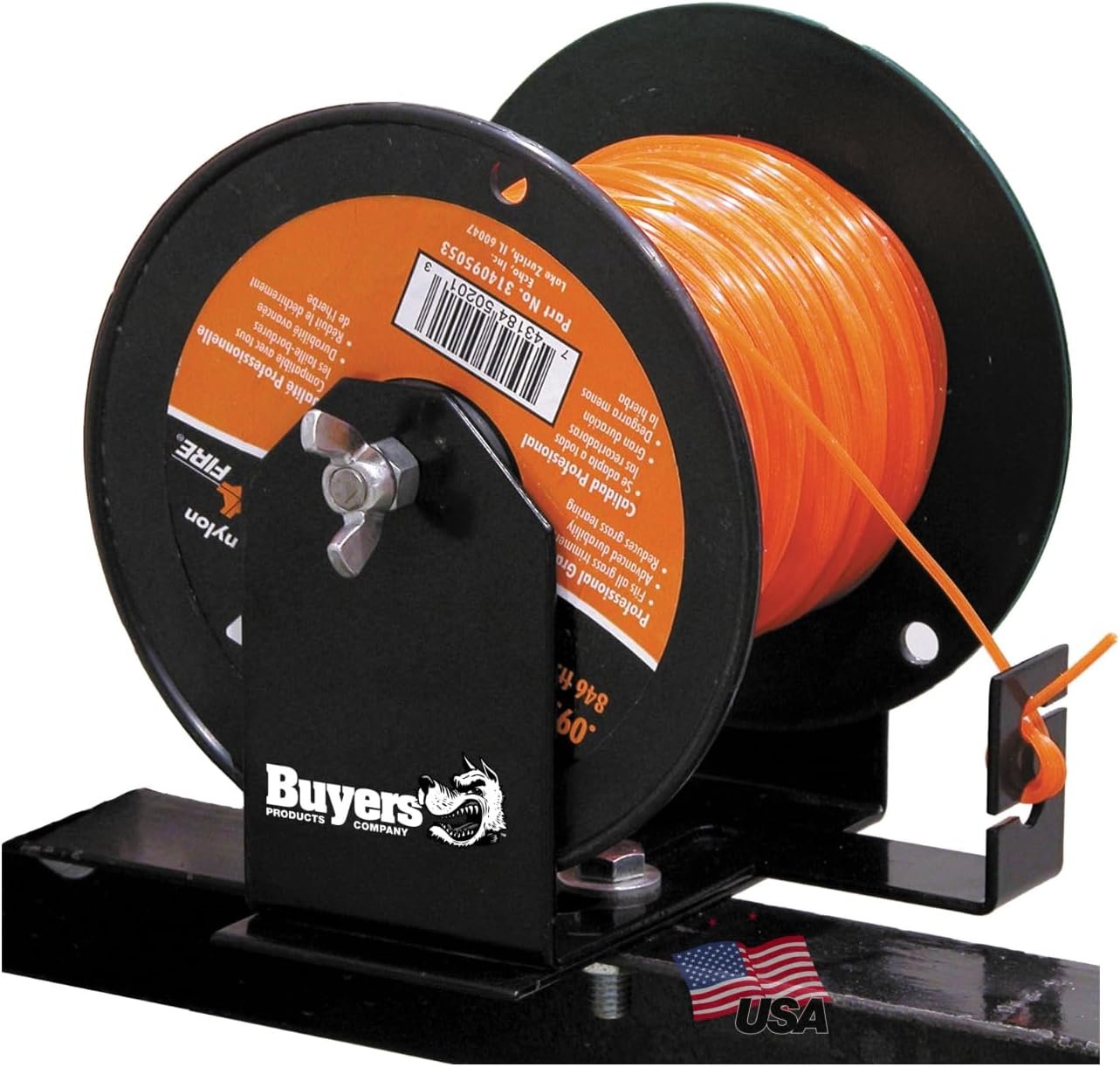
    The Buyers Products LT40 Steel Trimmer Line Spool Bracket With Hardware is designed for this type of application. Buyers Products identifies the LT40 as a steel trimmer-line spool holder intended for landscaping and outdoor power-equipment applications. The product is designed to hold a spool of trimmer line and includes mounting hardware, allowing it to be incorporated into an appropriate equipment-storage setup.

    The idea behind a spool bracket is straightforward, but the details matter. The mounting location, spool dimensions, line weight, vehicle movement, exposure to weather, and accessibility can all affect how useful a bracket is in practice. A properly positioned holder can improve organization, while an unsuitable mounting location can create unnecessary interference or safety concerns.

    This guide looks at the LT40 from an informational perspective. It explains the role of a trimmer-line spool bracket, the characteristics of a steel design, practical applications, installation considerations, general alternatives, and ways to organize landscaping supplies more efficiently.

    What Is a Trimmer Line Spool Bracket?

    A trimmer-line spool bracket is a mechanical holder designed to keep a spool of string-trimmer line in a fixed location.

    Professional landscaping operations can consume significant amounts of trimmer line. Keeping spare line organized is therefore a practical logistics issue rather than simply a matter of convenience.

    Without a dedicated holder, a spool might be stored loose in a truck bed, inside a toolbox, or among other landscaping supplies. Loose storage can make the spool harder to locate and can also allow it to roll around or become tangled with other equipment.

    A bracket provides a designated mounting point.

    Depending on the design and installation, the spool can remain accessible to workers while the rest of the vehicle or equipment storage area remains available for other tools.

    The LT40 is made from steel, making it different from lightweight plastic storage solutions and from larger enclosed spool-storage systems. Its purpose is focused: provide a dedicated place for a trimmer-line spool rather than functioning as a general storage container.

    Key Features of the Buyers Products LT40

    Steel Construction

    The LT40 uses a steel construction.

    Steel is widely used in commercial equipment accessories because it provides rigidity and can withstand the vibration and handling associated with work vehicles when appropriately designed and installed.

    For a spool bracket, rigidity is important because the holder needs to keep the spool positioned while the vehicle or equipment is moving.

    The use of steel also makes the mounting structure relatively straightforward. However, steel can be heavier than some aluminum or polymer alternatives, and its surface should be maintained appropriately when exposed to moisture and outdoor conditions.

    Designed for Trimmer-Line Spools

    The primary purpose of the LT40 is to hold a trimmer-line spool.

    This specialized design separates it from general-purpose hooks or shelves. A dedicated holder can make the spool easier to locate and can establish a consistent storage position.

    The exact spool compatibility should always be checked before installation. Trimmer line is sold in different spool sizes, and the physical dimensions of the spool can vary between products.

    A holder should not be assumed to accommodate every commercially available spool simply because both products are intended for landscaping use.

    Mounting Hardware Included

    The LT40 is supplied with hardware intended to support installation.

    Including mounting hardware can simplify the process of incorporating the bracket into a suitable equipment setup.

    However, the included hardware does not necessarily mean that every vehicle, trailer, rack, or wall surface will be compatible without additional considerations.

    The supporting structure needs to be strong enough for the bracket and the loaded spool, and the fasteners need to be appropriate for the material being mounted.

    Compact Equipment-Organization Approach

    A spool bracket takes up substantially less space than a large storage cabinet or dedicated enclosed compartment.

    This can be useful when a work vehicle already has limited storage capacity.

    Instead of allocating an entire box or compartment to a spool, a dedicated bracket can keep the material in one defined location.

    That approach is particularly relevant to landscaping crews that already carry fuel containers, blowers, hedge trimmers, chainsaws, hand tools, replacement parts, safety equipment, and other supplies.

    How the LT40 Can Be Used

    Landscaping Service Trucks

    A landscaping service truck often acts as a mobile workshop.

    Crews may carry several trimmers along with mowers, blowers, hedge trimmers, hand tools, fuel containers, protective equipment, and replacement supplies.

    A dedicated trimmer-line holder can be installed in an appropriate location so spare line is easy to identify when it is needed.

    This can reduce the need to search through unrelated storage compartments.

    Lawn-Care Equipment Trailers

    Trailers used for lawn-care equipment can have limited free space.

    Mowers and other large machines often occupy most of the floor area. Smaller accessories therefore need to be organized around the equipment rather than simply placed on the trailer floor.

    A spool bracket can create a dedicated location for line without requiring another storage container.

    The mounting position should be selected carefully so that the spool does not interfere with loading equipment or create an obstruction around walkways.

    Grounds-Maintenance Fleets

    Schools, municipalities, parks departments, golf facilities, and commercial property-maintenance operations may operate several landscaping vehicles.

    Standardizing equipment storage can make it easier for crews to know where frequently used supplies are located.

    A dedicated spool holder can become part of a broader equipment-organization system.

    Landscaping Workshops

    A spool bracket does not have to be limited to mobile equipment.

    If a workshop has a suitable mounting surface, a dedicated holder can keep spare line off the floor and in a defined location.

    This can be useful when multiple spool sizes or types are kept in inventory.

    Property-Maintenance Operations

    Businesses responsible for maintaining large properties may use string trimmers regularly.

    A dedicated holder provides an obvious place for spare line, reducing the likelihood that the spool will become mixed with unrelated equipment.

    Who May Find a Trimmer-Line Spool Holder Useful?

    Professional Landscapers

    Landscaping professionals often use string trimmers as part of routine property maintenance. For these users, having replacement line available can be more convenient than storing every spool inside a toolbox.

    Lawn-Care Businesses

    Small lawn-care companies can use dedicated storage accessories to make their trailers and trucks more organized.

    When several workers share equipment, a clearly defined storage location can also make inventory management easier.

    Municipal Grounds Crews

    Public works departments and parks crews may use multiple landscaping vehicles.

    A consistent storage layout can help crews quickly identify common consumables.

    Property Managers

    Organizations responsible for large properties may maintain their own groundskeeping equipment.

    A spool holder can form part of a workshop or vehicle storage system.

    Equipment Service Fleets

    Companies that maintain landscaping equipment for multiple crews may need practical ways to organize spare consumables.

    The LT40’s dedicated purpose makes it suitable for situations where trimmer line is regularly stocked and accessed.

    Important Things to Consider Before Installation

    Confirm the Spool Dimensions

    This is one of the most important considerations.

    Trimmer line spools come in different diameters, widths, and capacities. The holder should be checked against the actual spool you intend to use.

    A bracket that fits one spool configuration may not necessarily fit another.

    If a landscaping operation uses several types of trimmer line, measuring the spools before installation can prevent compatibility problems.

    Choose a Strong Mounting Surface

    The bracket should be attached to a structurally appropriate surface.

    A thin panel or weak sheet material may not provide adequate support, particularly when the vehicle is moving and the spool is repeatedly handled.

    Depending on the installation, reinforcement or a suitable backing structure may be necessary.

    Consider Vehicle Vibration

    A landscaping trailer or truck experiences vibration while traveling.

    A bracket mounted securely when stationary still needs to remain secure during normal vehicle movement.

    Fasteners should be properly installed, and the mounting structure should be inspected periodically.

    Think About Access

    The bracket should be easy enough for workers to reach without requiring them to climb over equipment or reach into unsafe positions.

    Accessibility is especially important when a spool needs to be replaced during a busy workday.

    A convenient location can save time, but the holder should never be positioned where accessing it requires standing in an unsafe area around moving equipment.

    Avoid Interference

    The spool should not interfere with doors, ramps, equipment handles, moving components, or other storage accessories.

    Before drilling mounting holes, it is useful to test the proposed location with the spool installed.

    Consider Weather Exposure

    A bracket mounted externally can be exposed to rain, humidity, road spray, dirt, fertilizer, grass clippings, and other materials.

    Because the LT40 is steel, surface protection and maintenance should be considered in environments where corrosion exposure is significant.

    Cleaning and inspection can help identify developing corrosion before it affects the bracket or mounting hardware.

    Steel vs. Other Spool Holder Materials

    Trimmer-line holders can be constructed from different materials. Understanding the general categories can help when deciding what type of storage solution fits a particular operation.

    Steel Holders

    Steel provides a rigid structure and is commonly used for commercial equipment accessories.

    The LT40’s steel construction is suited to applications where a dedicated, fixed spool holder is desired.

    The tradeoff is that steel generally weighs more than equivalent polymer components and requires attention to corrosion when exposed to moisture.

    Aluminum Holders

    Aluminum can provide lower weight while maintaining useful rigidity.

    For mobile equipment, lower component weight can be attractive.

    However, the exact strength and design of an aluminum holder depend on its construction and mounting system. Material alone does not determine suitability.

    Plastic or Polymer Holders

    Polymer holders can be lightweight and resistant to certain forms of corrosion.

    They may work well in less demanding environments, but their resistance to impact, heat, and long-term loading depends on the specific material.

    Enclosed Storage Boxes

    Instead of mounting a spool openly, some users may prefer to store trimmer line inside an enclosed toolbox.

    This provides additional protection from weather and physical contact with other equipment.

    The tradeoff is that an enclosed box uses more storage space and requires opening a compartment whenever line is needed.

    Comparing General Storage Approaches

    Storage MethodMain CharacteristicAccessibilityWeather ProtectionSpace Consideration
    Steel spool bracketDedicated open holderDirect accessLimited unless installed in a protected areaLow
    Aluminum spool holderLightweight dedicated holderDirect accessDepends on location and designLow
    Polymer holderLightweight and corrosion-resistant materialDirect accessDepends on material and locationLow
    Toolbox storageEnclosed general-purpose compartmentRequires opening boxGenerally higherModerate
    Workshop shelfFlexible general storageEasy if accessibleDepends on locationModerate

    No single category is appropriate for every landscaping operation. The decision depends on whether accessibility, protection, weight, available space, or flexibility is the primary concern.

    Organizing a Landscaping Truck Around a Spool Holder

    A trimmer-line bracket works best when it is part of a larger storage strategy.

    For example, a truck might have:

    • A dedicated spool holder for trimmer line
    • An enclosed toolbox for hand tools
    • A rack for blowers and trimmers
    • Secure storage for replacement parts
    • A separate location for protective equipment
    • Dedicated containers for small consumables
    • A secure area for fuel-related equipment where required

    Separating these categories reduces the chance that frequently used items become mixed together.

    It can also make inventory checks easier.

    A worker can quickly determine whether replacement line is available without opening multiple toolboxes.

    Managing Different Types of Trimmer Line

    Landscaping operations may use different line diameters depending on the equipment and cutting application.

    For example, lighter-duty equipment may use thinner line, while heavier trimmers can require larger diameters.

    A spool holder does not determine which line should be used.

    The trimmer manufacturer’s instructions should always be followed regarding compatible line diameter, shape, material, and spool configuration.

    If several types of line are carried, labeling can help avoid confusion.

    A simple identification system can distinguish between line intended for different trimmers.

    This is especially useful for businesses with multiple machines.

    Maintenance of the Bracket

    Although a spool bracket is relatively simple, regular inspection is still worthwhile.

    Inspect the Mounting Points

    Check the mounting bolts, nuts, brackets, and surrounding structure periodically.

    Vibration can gradually loosen hardware, especially on trailers and trucks that travel frequently over rough roads.

    Look for Corrosion

    Steel components should be checked for rust, particularly around mounting points and areas where water or debris may accumulate.

    Surface corrosion should be addressed according to the manufacturer’s maintenance recommendations.

    Check for Bending or Damage

    Inspect the holder for deformation.

    A bent bracket may indicate that it has experienced an impact or excessive force.

    If the bracket no longer holds the spool correctly, it should be evaluated before continued use.

    Keep the Holder Clear

    Grass, dirt, mud, and other landscaping debris can accumulate around equipment.

    Keeping the bracket reasonably clean makes inspection easier and can help prevent interference with the spool.

    Inspect the Spool

    The condition of the spool matters too.

    A cracked or damaged spool may not rotate or sit correctly on the holder.

    Replacing a damaged spool can be preferable to attempting to compensate for it through the bracket.

    Installation Planning

    Before permanently mounting the LT40, it is useful to plan the complete setup.

    Start by identifying the spool dimensions and determining how much clearance is required for installation and removal.

    Next, identify a structural mounting surface.

    Then consider the worker’s access path.

    Finally, check for interference with equipment, doors, ramps, suspension movement, and other components.

    This planning process can prevent a common problem with equipment accessories: installing the product successfully but discovering that its position makes it difficult to use.

    The mounting location should support normal operation, not simply fit the physical dimensions of the bracket.

    Safety Considerations

    A spool holder is a storage accessory rather than a lifting device or structural support component.

    It should not be used to support a person, secure unrelated heavy loads, or carry equipment beyond its intended purpose.

    The spool should remain properly positioned while the vehicle or trailer is moving.

    Workers should also avoid accessing externally mounted equipment while the vehicle is in motion.

    If the holder is installed near a traffic area, exhaust outlet, hot surface, or moving mechanical component, the location should be reconsidered.

    The mounting arrangement should also avoid creating sharp edges or protrusions that could present unnecessary hazards to workers.

    How a Dedicated Spool Holder Can Improve Organization

    The main benefit of a dedicated storage accessory is not simply that it holds an item. It establishes a repeatable storage system.

    When each frequently used item has a defined location, workers can develop a consistent workflow.

    For a landscaping crew, that might mean:

    1. Trimmers remain on a dedicated rack.
    2. Spare line remains on the LT40 holder.
    3. Hand tools remain in an enclosed toolbox.
    4. Replacement parts remain in labeled containers.
    5. Protective equipment remains in a designated compartment.

    This type of organization can make equipment checks easier before leaving the shop and when returning from a job.

    It also makes it easier to identify missing supplies.

    Frequently Asked Questions

    What is the Buyers Products LT40 used for?

    The LT40 is a steel bracket designed to hold a spool of trimmer line. It can be incorporated into landscaping trucks, trailers, workshops, equipment racks, and other suitable storage systems.

    Is the LT40 made from steel?

    Yes. The LT40 is a steel trimmer-line spool bracket.

    Does the LT40 include mounting hardware?

    The product is sold with hardware intended to assist with mounting. The exact installation method may still require consideration of the mounting surface and vehicle or equipment configuration.

    Can the LT40 hold any trimmer-line spool?

    Not necessarily. Trimmer-line spools vary in size and design.

    The dimensions and shape of the spool should be checked against the holder before installation.

    Can the bracket be mounted on a landscaping trailer?

    It may be suitable for a trailer if an appropriate structural mounting location is available.

    The mounting surface needs to be strong enough to support the holder and spool under normal vibration and handling conditions.

    Can it be mounted on a truck?

    A truck can be an appropriate application when the bracket is securely attached to a suitable structural location.

    The installer should consider clearance, access, vehicle vibration, and interference with other components.

    Is the LT40 weatherproof?

    The bracket is an open storage holder rather than an enclosed weatherproof container.

    If installed outdoors, the spool can be exposed to rain, dirt, and other environmental conditions. The mounting location and the type of trimmer line being stored should therefore be considered.

    Does the bracket protect trimmer line from moisture?

    Not by itself. Because the holder is open, it does not provide the same environmental protection as an enclosed storage box.

    If moisture protection is important, an enclosed storage solution may be more appropriate.

    Can multiple LT40 brackets be installed?

    Multiple brackets can potentially be incorporated into an equipment-storage system if sufficient mounting space is available.

    Using multiple holders can make sense for operations that carry different spool types or want separate storage positions for multiple crews.

    Can the bracket be used for other products?

    The LT40 is designed specifically around trimmer-line spool storage.

    Other items should only be stored on the bracket if their dimensions, weight, and shape are appropriate and doing so does not interfere with safe operation.

    Does the bracket replace a toolbox?

    No. A spool holder and a toolbox serve different purposes.

    The LT40 provides dedicated open storage for a trimmer-line spool, while a toolbox can hold a broader range of tools and supplies and provide greater protection from weather.

    How should the bracket be maintained?

    Inspect the mounting hardware, bracket structure, and surrounding area periodically. Look for corrosion, bending, loose hardware, or other signs of damage.

    Keeping the bracket clean can also make inspection easier.

    What should be considered before mounting it?

    The most important factors include spool compatibility, mounting-surface strength, clearance, accessibility, vibration, weather exposure, and interference with other equipment.

    Is a steel bracket heavier than an aluminum bracket?

    Generally, steel has a higher density than aluminum, so an equivalently sized steel component can weigh more.

    The actual weight difference depends on the design and material thickness of each product.

    Can the spool be left on the bracket while transporting the trailer?

    That depends on the particular spool, bracket installation, and operating environment.

    The spool should remain securely positioned and should not create a hazard during transportation. If additional retention is necessary, it should be provided through an appropriate method rather than improvised with unsuitable materials.

    Conclusion

    The Buyers Products LT40 Steel Trimmer Line Spool Bracket With Hardware is a specialized storage accessory intended to give landscaping crews a dedicated place for a trimmer-line spool.

    Its steel construction provides a rigid mounting structure, while its focused design keeps the spool separate from general tools and equipment. This can be useful on landscaping trucks, trailers, maintenance vehicles, workshops, and other equipment-storage systems where space and organization matter.

    A dedicated spool holder can be particularly useful for professional landscaping operations because trimmer line is a consumable that needs to remain accessible. Rather than taking up valuable space inside a general toolbox, a spool can have its own designated location.

    The most important considerations are compatibility, mounting strength, accessibility, clearance, vibration, and environmental exposure. Before installation, users should verify that the intended spool fits the holder and that the selected mounting surface can safely support the bracket and its contents.

    The open design also means that the LT40 does not provide the same weather protection as an enclosed toolbox. Users working in wet or highly exposed environments may therefore want to consider how the trimmer line will be protected from moisture and contamination.

    For landscaping businesses, grounds crews, and property-maintenance operations, equipment organization is ultimately about creating a predictable workflow. A dedicated bracket can be one small part of that system, giving replacement trimmer line a consistent location while leaving other storage areas available for tools and equipment.

    If the LT40’s configuration matches your trimmer-line storage needs and your planned mounting location is suitable,

    you can check more details on Amazon here.

    As an Amazon Associate, we earn from qualifying purchases.
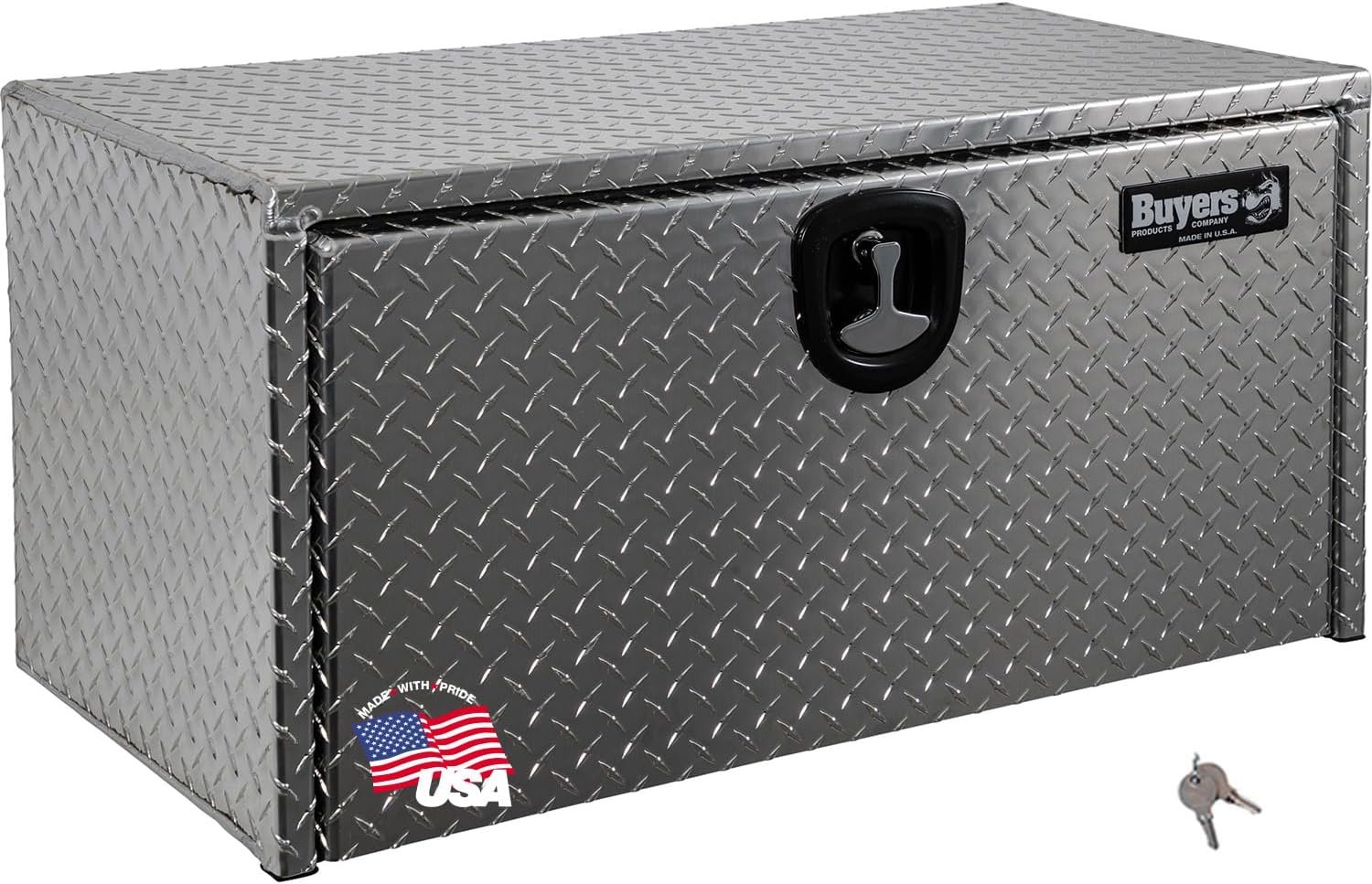
  • Buyers Products 1705105 36 x 18 x 18 Inch Aluminum Underbody Tool Box: Features, Uses, and Practical Guide

    Buyers Products 1705105 36 x 18 x 18 Inch Aluminum Underbody Tool Box: Features, Uses, and Practical Guide

    Introduction

    Keeping tools, replacement parts, roadside equipment, electrical supplies, and other work accessories organized can be challenging when a truck is used as a mobile workplace. Cab space is limited, the truck bed may already be occupied by equipment or cargo, and loose tools can quickly become difficult to locate. An underbody toolbox offers another approach: using space beneath the vehicle or on another suitable flat mounting surface for dedicated equipment storage.

    The Buyers Products 1705105 36 x 18 x 18 Inch Aluminum Underbody Tool Box is a diamond-tread aluminum storage box designed for truck and equipment applications. The model measures 36 inches wide, 18 inches deep, and 18 inches high, and product specifications identify its weight at approximately 43 pounds. It uses aluminum construction, a recessed drop door, a continuous hidden hinge, a replaceable gasket sealing system, aircraft-grade door cables, and a locking die-cast compression latch.

    The box is designed to provide accessible storage without requiring the available cargo area inside the truck bed to be used for every tool or accessory. Buyers Products states that the box can be mounted under a truck bed with appropriate mounting brackets or on a suitable flat surface. The mounting brackets for underbody installation are sold separately.

    An underbody toolbox is more than simply a metal container. Its dimensions, door configuration, mounting position, sealing system, latch, and construction material all affect how it fits into a work vehicle and how it can be used in daily operations.

    This guide explains the main characteristics of the Buyers Products 1705105, practical ways an underbody toolbox can be used, what to consider before installation, and how aluminum underbody storage compares with other common toolbox categories.

    Key Features of the Buyers Products 1705105

    36 x 18 x 18 Inch Dimensions

    The 1705105 has an overall size of approximately 36 inches wide, 18 inches deep, and 18 inches high. These dimensions create a long rectangular storage compartment that can accommodate tools and equipment that may be awkward to organize inside a smaller box.

    The width is particularly relevant for organizing longer hand tools, maintenance equipment, straps, electrical supplies, fittings, and other items commonly carried by service vehicles.

    The external dimensions should not, however, be confused with usable internal storage dimensions. Door construction, seals, hinges, latch components, and wall thickness occupy some of the available space.

    Before purchasing or installing the box, it is useful to measure the intended mounting area rather than relying only on the advertised dimensions.

    Aluminum Construction

    The toolbox is constructed from 0.100-inch-thick diamond-tread aluminum. Buyers Products describes the material as corrosion-resistant and designed for demanding outdoor conditions.

    Aluminum is commonly used in truck storage equipment because it provides a combination of structural rigidity and relatively low weight compared with many steel alternatives.

    For a mobile work vehicle, reducing unnecessary weight can be useful because the toolbox itself contributes to the vehicle’s overall payload. The 1705105 is listed at approximately 43 pounds, although shipping weight can be somewhat higher.

    The diamond-tread surface also gives the box the familiar appearance associated with many commercial truck toolboxes.

    Diamond-Tread Exterior

    The exterior uses a diamond-tread aluminum finish.

    Diamond-tread patterns are common on truck equipment because they provide a textured industrial appearance and can help disguise minor surface marks that naturally occur in working environments.

    The finish should not be interpreted as making the toolbox immune to scratches, dents, corrosion, or other physical damage. Like other vehicle-mounted equipment, it can be affected by road debris, impacts, chemicals, salt, moisture, and improper installation.

    Recessed Drop Door

    The 1705105 uses a recessed drop door. The door opens downward to provide access to the storage compartment. Buyers Products describes the recessed design as part of the box’s approach to keeping the door and latch assembly integrated with the overall enclosure.

    A drop-down door can also create a temporary working surface when open, depending on the installation and load limitations of the door. It should not automatically be treated as a work platform or seat unless the manufacturer specifically permits that use.

    The opening dimensions are smaller than the overall exterior dimensions. One specification source lists an opening of approximately 32.75 inches wide by 15.3 inches high.

    This distinction matters when planning what tools or cases need to be stored inside.

    Continuous Hidden Hinge

    A continuous hidden hinge is used along the door.

    Instead of having exposed individual hinge points along the exterior, the hinge is integrated into the design. Buyers Products identifies the hidden hinge as part of the system intended to help keep moisture and road dirt away from the hinge area.

    For a truck toolbox exposed to road spray and outdoor conditions, hinge placement can be an important design consideration.

    Replaceable Gasket Sealing System

    The box incorporates a replaceable gasket sealing system.

    A gasket helps create a barrier around the door when it is closed. This is particularly relevant for an underbody toolbox because the storage compartment can be exposed to rain, road spray, dust, mud, and other contaminants.

    The manufacturer’s specifications identify a replaceable gasket system, while one distributor describes the seal as a D-bulb-style gasket.

    A weather-resistant enclosure should still be installed correctly. A damaged gasket, improperly aligned door, loose mounting, or damaged box can compromise the enclosure.

    Locking Die-Cast Compression Latch

    The toolbox uses a locking die-cast compression latch.

    A compression latch does more than simply hold a door closed. Its design draws the door against the gasket as the latch is secured, helping maintain pressure around the enclosure.

    Buyers Products identifies the locking compression latch as part of the system intended to help protect the contents from weather and discourage unauthorized access.

    The locking feature is useful for controlled access to stored tools, but a toolbox lock should not be considered equivalent to a high-security safe. The level of protection depends on the entire vehicle, mounting system, surrounding structure, and circumstances.

    Aircraft-Grade Door Cables

    The door uses cables described by Buyers Products as aircraft-grade cables. These cables help support the drop door when it is opened.

    This is an important practical feature because a wide metal door can become heavy and cumbersome when fully open. Door cables help control its position and reduce the likelihood of the door simply dropping open.

    The cables should still be inspected periodically, particularly on equipment exposed to frequent opening and closing, road spray, dirt, or harsh weather.

    Mounting Flexibility

    The 1705105 can be mounted under a truck bed or on an appropriate flat surface. Underbody mounting requires suitable mounting brackets, which are sold separately.

    This flexibility can make the box relevant to different truck and equipment configurations.

    However, “mounts on a flat surface” does not mean that every flat surface is automatically suitable. The structure supporting the toolbox must be strong enough for the box and its contents, and the mounting method must account for vibration, movement, and the weight of the stored equipment.

    How an Underbody Toolbox Can Be Used

    Organizing Hand Tools

    One straightforward application is the storage of frequently used hand tools.

    Wrenches, sockets, pliers, screwdrivers, hammers, measuring equipment, and other maintenance tools can be separated from larger equipment carried elsewhere on the vehicle.

    The long 36-inch width provides room for organizing groups of tools rather than placing everything in a small portable toolbox.

    For better organization, operators can use tool trays, removable organizers, labeled containers, or smaller cases inside the main compartment.

    Storing Vehicle Maintenance Equipment

    A service truck may need to carry items such as replacement filters, fittings, gloves, electrical connectors, straps, fasteners, and other maintenance supplies.

    An underbody compartment can provide a dedicated location for these items, leaving the main cargo area available for larger equipment.

    This can be particularly useful when different categories of equipment need to remain separated.

    Electrical and Utility Work

    Electricians, utility crews, telecommunications technicians, and maintenance professionals often carry many small components alongside larger tools.

    An underbody toolbox can provide a dedicated compartment for items that might otherwise become scattered across the truck.

    Examples could include cable accessories, hand tools, fasteners, connectors, protective equipment, and maintenance supplies.

    The suitability of the compartment for sensitive electronic equipment depends on the environmental conditions and the level of protection required. A gasketed metal toolbox should not automatically be treated as a climate-controlled or condensation-proof enclosure.

    Construction and Contractor Vehicles

    Contractors can use underbody storage to separate frequently needed tools from larger materials.

    For example, a truck might carry power equipment and building materials in the bed while using an underbody compartment for hand tools, measuring equipment, fasteners, or replacement accessories.

    The advantage is primarily organizational: different types of equipment can have designated storage locations.

    Roadside and Emergency Equipment

    Service vehicles can also use dedicated compartments for roadside equipment.

    Depending on the vehicle and company procedures, this could include reflective equipment, work gloves, basic hand tools, straps, replacement components, or other supplies.

    Items should be selected according to the vehicle’s actual purpose and the operator’s safety procedures.

    Who May Find This Type of Toolbox Useful?

    Mobile Service Technicians

    A technician who spends much of the working day traveling between job sites may benefit from having frequently used tools stored outside the cab but still within easy reach.

    An underbody box can create a dedicated storage area that does not consume passenger space.

    Utility and Fleet Operators

    Utility vehicles often have specialized equipment mounted to the truck, leaving limited conventional cargo space.

    Underbody storage can complement existing compartments and help distribute equipment around the vehicle.

    Contractors

    Contractors who transport both materials and tools can use different compartments for different categories of equipment.

    The 36-inch width can be useful for organizing longer tools or groups of smaller tools.

    Truck Upfitters

    Truck equipment installers and fleet builders may incorporate underbody storage into customized work vehicles.

    The 1705105 is specifically listed for truck equippers, truck installers, truck upfitters, and maintenance professionals by one distributor.

    Fleet Managers

    For fleets, standardized storage can make it easier to establish consistent equipment layouts.

    However, fleet managers should confirm mounting compatibility for each vehicle model and account for differences in frame dimensions, exhaust systems, fuel tanks, suspension components, and other underbody equipment.

    Important Things to Consider Before Installation

    Measure the Mounting Area

    Before installing a 36 x 18 x 18-inch toolbox, measure the available space carefully.

    Under a truck, the nominal space may look sufficient until other components are considered. Exhaust systems, fuel tanks, wiring, suspension parts, hydraulic equipment, spare tires, and frame structures can affect the available clearance.

    The toolbox should not interfere with moving components, heat sources, electrical systems, or routine vehicle maintenance.

    Consider the Door Opening

    The external width of the box is 36 inches, but the usable door opening is smaller. One published specification lists the opening at approximately 32.75 inches wide and 15.3 inches high.

    When deciding what to store inside, measure the actual equipment rather than assuming that an item will fit because it is smaller than the outside dimensions.

    This is especially important for rigid cases, long tools, and boxed equipment.

    Mounting Hardware Is Separate

    The box itself does not necessarily include the brackets required for underbody installation.

    Buyers Products specifies that mounting brackets are sold separately for under-bed installation.

    The exact mounting solution depends on the vehicle and installation configuration. Using appropriate hardware is important because the box can become substantially heavier once loaded.

    Account for Total Weight

    The toolbox itself weighs approximately 43 pounds.

    That is before tools, equipment, parts, or supplies are placed inside.

    A fully loaded toolbox can therefore add substantially more weight to the vehicle. The additional weight should be considered as part of the vehicle’s overall payload and axle-loading requirements.

    Check Ground Clearance

    An underbody box should not significantly compromise the vehicle’s necessary ground clearance.

    This becomes especially important for work trucks that regularly travel over uneven terrain, construction sites, rural roads, or other areas where the underside of the vehicle may encounter obstacles.

    The mounting position should provide sufficient clearance for the vehicle’s normal operating environment.

    Consider Heat Sources

    Underbody locations can expose equipment to heat generated by exhaust components and other vehicle systems.

    The intended mounting position should be evaluated for temperature exposure. Stored materials should also be compatible with the expected environment.

    Consider Corrosive Environments

    Aluminum offers corrosion resistance, but that does not mean it is immune to environmental damage.

    Road salt, chemicals, fertilizers, industrial contaminants, and trapped moisture can affect vehicle-mounted equipment and its hardware.

    Regular inspection and cleaning can help identify developing issues.

    Weather Resistance and Storage Protection

    A major reason for selecting an underbody toolbox is the desire to keep equipment enclosed.

    The 1705105 combines a recessed door, continuous hidden hinge, replaceable gasket, and compression latch as part of its enclosure design.

    These features can help limit exposure to ordinary outdoor conditions when the box is correctly closed and maintained.

    Still, weather resistance should be understood realistically.

    A gasket can deteriorate. The door can become misaligned. Mounting hardware can loosen. Damage to the box can create openings. Dirt can accumulate around sealing surfaces.

    For equipment that is particularly sensitive to moisture, additional protective cases or containers inside the toolbox may be appropriate.

    Aluminum vs. Steel Underbody Toolboxes

    Aluminum and steel are two common materials used for truck storage boxes.

    Neither material is automatically appropriate for every application.

    Aluminum Toolboxes

    Aluminum is relatively lightweight and naturally corrosion-resistant compared with untreated steel.

    This makes it attractive for work trucks where equipment weight matters.

    The 1705105 uses 0.100-inch diamond-tread aluminum and weighs approximately 43 pounds.

    Steel Toolboxes

    Steel boxes can offer different structural characteristics and may be selected for applications where durability and resistance to certain forms of physical abuse are priorities.

    The tradeoff is that steel construction can add more weight, depending on the design.

    Powder-Coated or Painted Boxes

    Some steel and aluminum boxes use coatings to provide a different appearance or additional surface protection.

    Coatings can eventually be scratched or damaged, so their condition should be monitored.

    Choosing Between Materials

    The practical decision should consider:

    • Vehicle payload
    • Environmental exposure
    • Desired weight
    • Physical demands
    • Mounting structure
    • Maintenance requirements
    • Security expectations
    • Appearance
    • Storage needs

    The goal is to match the toolbox construction to the working environment rather than assuming that one material is universally superior.

    Underbody vs. Cross-Bed Toolboxes

    Another useful comparison is the mounting location.

    Underbody Storage

    An underbody toolbox uses otherwise unused space beneath the vehicle.

    This can leave the truck bed open for larger equipment, materials, pallets, machinery, or other cargo.

    The tradeoff is that installation can be more involved, and clearance must be considered carefully.

    Cross-Bed Storage

    A cross-bed toolbox is typically installed across the truck bed behind the cab.

    It is often easy to access from above and can provide a substantial storage compartment, but it occupies part of the bed.

    Side-Mounted Storage

    Some work trucks use side-mounted or side-access compartments integrated into custom bodies.

    These can provide convenient access while maintaining a particular vehicle layout, although installation requirements vary.

    The appropriate configuration depends heavily on the truck and how it is used.

    Organizing the Interior

    An empty toolbox can become disorganized surprisingly quickly.

    A practical organization strategy is to assign areas to specific categories.

    For example, one section could hold hand tools, another could hold consumables, and another could be reserved for emergency or replacement equipment.

    Smaller containers can be useful for fasteners, electrical connectors, fittings, and other small items.

    Labels can also help technicians identify where equipment belongs. This is particularly valuable in fleet environments where multiple operators use the same vehicle.

    The toolbox does not include an internal shelf according to published specifications, so users who need compartmentalized storage may want to add removable organizers rather than permanently modifying the box.

    Any modification should be considered carefully because drilling holes or altering the enclosure could affect weather resistance and structural integrity.

    Maintenance and Inspection

    Routine inspection can help extend the useful life of vehicle-mounted storage equipment.

    Inspect the Gasket

    Check the gasket for cracking, flattening, separation, or other signs of deterioration.

    A damaged gasket may reduce the enclosure’s ability to keep out moisture and debris.

    Check the Latch

    The compression latch should operate smoothly and close the door securely.

    If the door no longer compresses against the gasket correctly, investigate the alignment and hardware rather than simply forcing the latch.

    Inspect the Door Cables

    The door cables should be checked for fraying, damage, corrosion, or other abnormalities.

    A damaged cable can affect how the drop door is supported when open.

    Check Mounting Hardware

    Vehicle vibration can place continual stress on mounting hardware.

    Periodic inspection of bolts, brackets, fasteners, and mounting points is therefore sensible.

    Clean the Sealing Surfaces

    Dirt and debris around the gasket can interfere with proper sealing.

    Cleaning the relevant surfaces periodically can help maintain consistent contact between the gasket and door.

    Security Considerations

    The 1705105 has a locking compression latch, providing a way to secure the compartment when the vehicle is unattended.

    However, toolbox security should be viewed as part of a larger vehicle-security system.

    A determined thief may target the entire vehicle or attempt to access mounting hardware. The security of the stored tools therefore depends on factors such as the vehicle itself, parking environment, mounting method, and what is stored inside.

    For expensive equipment, additional security measures may be appropriate.

    It is also useful to avoid leaving unnecessary high-value equipment inside a vehicle when it will be unattended for extended periods.

    Frequently Asked Questions

    What are the dimensions of the Buyers Products 1705105?

    The toolbox measures approximately 36 inches wide, 18 inches deep, and 18 inches high.

    What material is the 1705105 made from?

    It is constructed from 0.100-inch-thick diamond-tread aluminum. Buyers Products describes the aluminum as corrosion-resistant and intended for demanding outdoor use.

    How much does the toolbox weigh?

    Published specifications list the toolbox at approximately 43 pounds. Shipping weight may be higher depending on packaging.

    Does the toolbox lock?

    Yes. The 1705105 uses a locking die-cast compression latch.

    Is the mounting hardware included?

    Underbody mounting brackets are sold separately according to Buyers Products’ product information.

    The exact hardware required can depend on the truck and installation configuration.

    Can it be mounted somewhere other than underneath a truck?

    Buyers Products states that the box can be mounted on a suitable flat surface as well as under a truck bed.

    The supporting structure and mounting method should be appropriate for the loaded toolbox.

    Is the toolbox weather resistant?

    The box incorporates a recessed door, gasket sealing system, continuous hidden hinge, and compression latch intended to help protect contents from outdoor exposure.

    It should still be maintained properly, and sensitive equipment may benefit from additional internal protection.

    What is the door opening size?

    One published specification lists an opening of approximately 32.75 inches wide by 15.3 inches high.

    This is smaller than the toolbox’s overall 36-by-18-inch exterior dimensions and should be considered when storing larger equipment.

    Does the box have an internal shelf?

    Published specifications for this model indicate no internal shelf.

    Users can organize the interior with removable trays or containers according to their needs.

    Is aluminum a good material for an underbody toolbox?

    Aluminum is commonly used for truck toolboxes because it can provide corrosion resistance while keeping weight relatively manageable.

    Whether it is suitable for a particular vehicle depends on the environment, expected use, payload requirements, and the type of equipment being stored.

    Can it be used on any truck?

    Not necessarily. Although the toolbox itself is intended for truck applications, the physical space and mounting structure vary between vehicles.

    The available clearance, frame configuration, exhaust location, suspension movement, and other underbody components should be checked before installation.

    What kinds of tools can be stored inside?

    The compartment can be used for many categories of tools and equipment, including hand tools, maintenance supplies, fittings, electrical accessories, straps, replacement parts, and other work equipment that fits through the door opening.

    The storage environment should also be considered for moisture-sensitive or temperature-sensitive items.

    Is the drop-down door designed to support weight?

    The door provides access to the toolbox and is supported by door cables when open. It should not automatically be treated as a workbench, step, or platform unless the manufacturer specifically rates it for such use.

    Does the toolbox replace a truck-bed toolbox?

    Not necessarily. Underbody and truck-bed toolboxes serve different purposes.

    An underbody box can complement existing storage and preserve truck-bed space, while a bed-mounted box may provide easier top access or a different storage configuration.

    Conclusion

    The Buyers Products 1705105 36 x 18 x 18 Inch Aluminum Underbody Tool Box is designed around a practical need in commercial and work-truck environments: creating dedicated enclosed storage without consuming the primary cargo area of the truck bed.

    Its 36 x 18 x 18-inch dimensions, 0.100-inch diamond-tread aluminum construction, recessed drop door, continuous hidden hinge, replaceable gasket, aircraft-grade door cables, and locking compression latch provide a combination of storage access, enclosure features, and vehicle-oriented construction.

    The toolbox can be relevant to service technicians, contractors, utility fleets, truck upfitters, maintenance professionals, and other users who need additional organized storage on a work vehicle.

    At the same time, choosing an underbody toolbox involves more than checking the box dimensions. The available mounting space, vehicle structure, ground clearance, exhaust and suspension components, payload capacity, mounting hardware, and intended contents should all be considered before installation.

    The box’s weather-resistant design can help protect tools and equipment from ordinary outdoor exposure, but regular inspection remains important. Gaskets, door cables, latches, mounting hardware, and sealing surfaces can all experience wear over time.

    For users comparing aluminum, steel, bed-mounted, and underbody storage options, the right choice ultimately depends on the vehicle configuration and the type of work being performed. The 1705105 is particularly oriented toward applications where a relatively lightweight aluminum enclosure and underbody access are useful parts of the overall storage plan.

    If the dimensions, mounting configuration, and storage characteristics match your vehicle and work requirements,

    you can check more details on Amazon here.

    As an Amazon Associate, we earn from qualifying purchases.
  • Buyers Products OP24X24P HDPE Poly Outrigger Pad: Features, Uses, and Practical Guide

    Buyers Products OP24X24P HDPE Poly Outrigger Pad: Features, Uses, and Practical Guide

    Introduction

    When heavy equipment is operated on concrete, asphalt, paved surfaces, or other finished ground, the area beneath the equipment can become an important part of the setup. Outriggers, stabilizer jacks, and similar support equipment concentrate substantial forces into relatively small contact areas. A properly selected outrigger pad can help distribute that load over a larger footprint while providing a protective layer between the equipment and the surface underneath.

    The Buyers Products OP24X24P HDPE Poly Outrigger Pad is a square polymer pad designed for this type of application. It measures 24 inches by 24 inches and is 1 inch thick, and it is constructed from high-density polyethylene (HDPE). Buyers Products identifies the pad for applications involving utility trucks, small aerial lifts, tree-trimming equipment, cranes, and other heavy equipment. The manufacturer also describes the material as a lightweight alternative to rubber and notes that the pad incorporates a rope-style handle for carrying and positioning.

    An outrigger pad is a relatively simple piece of equipment, but selecting one involves more than looking at its dimensions. Ground conditions, equipment weight, outrigger configuration, surface type, manufacturer requirements, and the expected load all matter. The pad itself should not be treated as a substitute for proper equipment operation, engineering calculations, or the manufacturer’s instructions.

    This guide explains what the OP24X24P is, how an HDPE outrigger pad works, where this type of pad can be useful, and what operators should consider before incorporating one into a work setup.

    What Is an Outrigger Pad?

    An outrigger pad is a support accessory placed beneath an outrigger, stabilizer, jack, or similar load-bearing component. Its primary purpose is to provide a broader contact area between the equipment and the supporting surface.

    Without an appropriate pad, an outrigger foot may place concentrated pressure on a relatively small section of pavement or concrete. A larger pad spreads that contact over a greater area. This can be particularly relevant when equipment is operating on finished surfaces where concentrated loads could contribute to surface damage.

    The concept is similar to placing a broad support under a load rather than allowing a narrow support point to bear directly against the ground. The effectiveness of this arrangement depends on many factors, including the characteristics of the pad, the supporting surface, and the actual load.

    The OP24X24P provides a 24-by-24-inch square footprint. Its one-inch thickness provides a rigid polymer support surface while keeping the pad considerably thinner than some heavier rubber or specialty support products.

    Buyers Products lists the OP24X24P as part of its High Density Poly Outrigger Pad range. The manufacturer also offers different dimensions and thicknesses, including an 18-by-18-inch one-inch model and a 24-by-24-inch 1.5-inch model.

    Key Features of the Buyers Products OP24X24P

    24 x 24 Inch Footprint

    The most noticeable characteristic of the OP24X24P is its square 24 x 24-inch footprint.

    A 24-inch square provides considerably more surface area than the small foot of many stabilizers or jacks. In practical terms, the pad creates a larger interface between the equipment and the supporting surface.

    That larger footprint can be useful when an operator needs to distribute support forces across a broader area. However, the pad’s dimensions alone do not establish whether it is appropriate for a particular load. The actual load, ground conditions, equipment configuration, and applicable manufacturer specifications must still be considered.

    One-Inch Thickness

    The pad is 1 inch thick. This provides a relatively substantial polymer support layer while keeping the product manageable compared with significantly thicker specialty pads.

    Thickness can matter when considering storage, transportation, clearance, and handling. A one-inch pad may also be easier to position in confined equipment compartments than a much thicker support product.

    The OP24X24P should nevertheless be selected according to the requirements of the equipment rather than simply because its dimensions are convenient.

    HDPE Construction

    The pad is made from high-density polyethylene, commonly abbreviated as HDPE.

    HDPE is a thermoplastic polymer widely used in industrial, transportation, construction, and outdoor applications. For an outrigger pad, one of the practical advantages of a polymer construction is the combination of a rigid support surface with a comparatively manageable weight.

    Buyers Products describes its high-density polymer pads as a lightweight alternative to rubber.

    This distinction can be useful for crews that frequently reposition pads throughout a workday. Material selection is still only one part of the decision, however. Different pad materials can behave differently under load, temperature, surface conditions, and repeated use.

    Built-In Rope-Style Handle

    The OP24X24P incorporates a rope-style handle.

    A handle may seem like a small detail, but it can make a noticeable difference when an operator needs to move a large square pad into position. A 24-inch pad is much larger than many conventional hand-carried accessories, so having a dedicated grip provides a practical way to transport or reposition it.

    Buyers Products specifically identifies the rope-style handle as an easy-grab carrying feature.

    The handle is primarily a handling aid. It should not be interpreted as a lifting attachment for machinery or as an indication that the pad can be moved while supporting a load.

    Black Finish

    The OP24X24P is supplied in black. The dark finish is typical of many industrial polymer support products and provides a straightforward appearance suited to utility, construction, transportation, and equipment applications.

    Individual Pad Configuration

    Retailer specifications indicate that the OP24X24P is supplied as an individual pad.

    This is worth considering when planning an equipment setup. A machine using multiple outriggers may require multiple pads, depending on its configuration and the manufacturer’s operating requirements.

    How It Can Be Used

    Utility Trucks

    Utility trucks frequently use stabilizing equipment when workers need a secure working platform or when equipment mounted to the truck requires additional support.

    Buyers Products specifically lists utility trucks among the intended applications for its high-density poly outrigger pads.

    For these applications, an outrigger pad can provide a broad interface between the stabilizer and the pavement or concrete underneath.

    Small Aerial Lifts

    Small aerial lifts can use stabilizers or outriggers to improve stability during operation. A suitable support pad may be positioned beneath the stabilizer according to the equipment manufacturer’s instructions.

    The 24-inch square footprint can be useful when a larger support area is required and when the available working space permits the pad to be positioned correctly.

    Operators should always follow the aerial lift manufacturer’s instructions regarding ground conditions, outrigger deployment, cribbing, pads, and allowable operating configurations.

    Tree-Trimming Equipment

    Tree-care professionals often operate equipment on driveways, roads, parking areas, lawns, and other mixed surfaces.

    Buyers Products identifies tree trimmers as another application for its high-density polymer outrigger pads.

    In this environment, protecting finished surfaces can be particularly relevant. A pad provides a separation layer between the equipment’s stabilizer and the surface underneath while distributing the support point over a larger footprint.

    Cranes and Heavy Equipment

    Outrigger pads are also associated with cranes and other heavy equipment.

    Grainger lists the OP24X24P for use with cranes, heavy equipment, tree trimmers, and utility trucks.

    For heavier equipment, however, the importance of proper load assessment becomes even greater. A 24-inch square pad should never automatically be assumed to have sufficient capacity for every crane or heavy machine simply because it is marketed for heavy-equipment applications.

    Equipment manufacturers and qualified personnel should determine the appropriate support system for the actual operating conditions.

    Protecting Finished Surfaces

    One of the primary reasons to use an outrigger pad is to help protect surfaces beneath heavy equipment.

    Concrete, asphalt, paving stones, and similar surfaces can respond differently to concentrated loads. A broad support pad can distribute contact forces across a larger area than a small outrigger foot.

    This does not guarantee that a surface cannot be damaged. Existing cracks, weak subgrades, voids, recently installed pavement, underground structures, drainage systems, and other conditions can affect the result.

    A pad should therefore be considered part of a larger ground-support strategy rather than a guarantee against surface damage.

    Understanding Load Distribution

    Load distribution is one of the most important concepts when using an outrigger pad.

    Imagine an outrigger transferring a downward force through a relatively small metal foot. If that foot directly contacts the ground, the force is concentrated over its smaller contact area. Placing a larger pad beneath it creates a larger area over which the force can be transferred.

    The basic relationship can be represented conceptually as:

    Ground pressure = Load รท Supporting area

    This does not mean that the actual behavior of a loaded outrigger can be reduced to a simple mathematical calculation. Real-world conditions involve soil strength, pad stiffness, deflection, load distribution, equipment geometry, dynamic forces, and other variables.

    Nevertheless, the principle explains why larger support areas are commonly used beneath outriggers.

    For the OP24X24P, the nominal square footprint is 24 inches by 24 inches. That corresponds to 576 square inches of geometric surface area before considering the actual contact pattern and deformation of the materials involved.

    The relevant load should not be assumed to be distributed perfectly across all 576 square inches under every circumstance. The condition of the surface, the shape of the outrigger foot, and the stiffness of the pad all influence how the load is actually transferred.

    Who May Find This Type of Pad Useful?

    The OP24X24P may be relevant to several categories of equipment operators and businesses.

    Utility and Service Fleets

    Companies operating bucket trucks, service trucks, or other vehicles equipped with stabilizers may use outrigger pads as part of their standard field equipment.

    The integrated handle can be particularly useful for technicians who need to position support pads repeatedly at different job locations.

    Tree-Care Professionals

    Tree-care operations can involve heavy equipment positioned on driveways, roads, parking lots, and other surfaces. A broad polymer pad can provide an additional protective layer beneath an outrigger.

    Equipment Rental and Service Companies

    Rental companies and equipment service providers may need standardized support accessories for machinery that uses outriggers or stabilizers.

    The 24-by-24-inch format may be appropriate for certain machines, although compatibility should always be checked against the specific equipment.

    Contractors

    Contractors working with lifting, access, utility, or support equipment may encounter situations where additional ground-contact area is required.

    An outrigger pad can be part of the setup, provided the equipment manufacturer and applicable safety requirements permit its use.

    Operators Working Around Finished Property

    When heavy equipment is being deployed around finished driveways, parking lots, concrete slabs, or paved areas, protecting the underlying surface may be an important consideration.

    The pad is designed specifically with surface protection in mind, according to Buyers Products.

    Important Things to Consider Before Using an Outrigger Pad

    Verify the Equipment Requirements

    Not every machine requires the same type of support pad.

    Before using an OP24X24P, check the equipment manufacturer’s operating manual. The manual may specify pad dimensions, materials, minimum support area, ground requirements, or other procedures.

    If the equipment manufacturer specifies a particular support configuration, that specification should take priority.

    Consider Ground Conditions

    A pad placed on weak or unstable ground cannot automatically make the ground suitable for heavy equipment.

    Soil composition, moisture, voids, slopes, buried structures, drainage, and previous excavation can all influence ground stability.

    A large pad can distribute force over a wider area, but the supporting ground still needs adequate strength.

    Inspect the Pad Before Use

    Before deployment, inspect the pad for visible damage, excessive wear, cracks, deformation, or other conditions that could affect its use.

    The pad should sit appropriately on the supporting surface. Debris, rocks, uneven material, or other objects beneath the pad can change how the load is transferred.

    Inspect the Handle

    Because the OP24X24P has a rope-style handle, the handle should also be checked periodically for damage or deterioration.

    The handle is intended to assist with handling and positioning. It should not be used as a substitute for appropriate lifting equipment when a mechanical lifting method is required.

    Think About Storage

    A 24-inch square pad takes up meaningful storage space.

    Operators who carry multiple pads should consider how they will be secured during transportation. Pads should not be allowed to move freely inside a vehicle or equipment compartment where they could become hazards.

    Account for Multiple Outriggers

    A machine with several outriggers may require several pads.

    The correct number depends on the equipment design and the manufacturer’s instructions. Using only one pad where multiple support points require support would not provide a complete setup.

    HDPE vs. Rubber Outrigger Pads

    Outrigger pads are available in several materials, including HDPE, rubber, hardwood, and other engineered materials.

    The OP24X24P uses HDPE. Buyers Products describes HDPE as a lightweight alternative to rubber in this product category.

    HDPE Pads

    HDPE pads can provide a combination of rigidity, manageable weight, and durability suitable for many support applications.

    They can be attractive when portability is important because the material can offer a practical balance between structural support and handling convenience.

    Rubber Pads

    Rubber pads are another common category. Rubber can have different surface characteristics and deformation behavior compared with rigid polymer pads.

    Some applications may benefit from the characteristics of rubber, while others may favor polymer construction. The choice should be based on the equipment requirements, ground conditions, and intended application rather than on material preference alone.

    Hardwood Pads

    Hardwood has historically been used for cribbing and support applications. Wood products can have different characteristics related to grain direction, moisture, damage, and repeated use.

    A purpose-designed polymer pad may offer different handling and maintenance characteristics.

    Thicker Polymer Pads

    Buyers Products also lists a 24-by-24-inch polymer pad with a 1.5-inch thickness, identified as model OP242415.

    This illustrates why thickness should be considered separately from length and width. A larger or thicker pad is not automatically appropriate for every application; the specific equipment and load requirements determine what is suitable.

    Comparing General Outrigger Pad Categories

    Pad CategoryTypical CharacteristicsHandling ConsiderationsMain Consideration
    HDPE/polymerRigid, relatively lightweight, durableGenerally manageable for field handlingVerify load and application requirements
    RubberFlexible and resilientWeight can vary considerablyConsider deformation and surface conditions
    HardwoodTraditional support materialCan be substantial in size and weightInspect for damage and material condition
    Thicker engineered polymerMore material thicknessMay be heavier or bulkierUseful only where specified or appropriate

    This comparison is intended to explain general material categories rather than identify one material as universally superior.

    Practical Positioning Considerations

    Correct positioning is just as important as selecting the pad.

    The pad should generally be positioned so the outrigger or stabilizer foot is properly supported and does not sit near an unstable edge.

    The supporting surface should be evaluated before deployment. A pad that extends beyond a pavement edge, sits across a void, or bridges a weak section of ground may not behave as expected.

    Operators should also consider slope. Equipment should be positioned and stabilized according to the manufacturer’s instructions rather than attempting to compensate for an unsuitable surface solely through the use of a larger pad.

    When working near trenches, excavations, underground utilities, retaining structures, or other potentially weak areas, additional professional assessment may be necessary.

    Maintenance and Care

    HDPE is generally selected for demanding environments, but no support accessory should be treated as maintenance-free.

    After use, inspect the pad for contamination and visible damage. Remove material that could interfere with stable placement during the next use.

    Keeping pads reasonably clean also makes it easier to identify cracks, deformation, or other changes.

    Storage conditions matter as well. Avoid placing heavy equipment on stored pads for extended periods unless the manufacturer specifically permits such storage. Keep the pads organized so they are easy to inspect before deployment.

    Because the OP24X24P is relatively large, secure transportation is also important. A loose 24-inch square pad can move unexpectedly in a vehicle or equipment compartment.

    Why Dimensions Matter

    The 24-by-24-inch dimensions provide a substantial square footprint, but dimensions should always be considered in relation to the actual machine.

    A pad that is too small may not provide the desired support area. A pad that is larger than necessary may be difficult to position or transport.

    Thickness also affects handling and physical characteristics. The OP24X24P is one inch thick, while Buyers Products offers other configurations, including a 24-by-24-inch 1.5-inch polymer model.

    The correct selection therefore depends on more than simply choosing the largest available pad.

    Frequently Asked Questions

    What are the dimensions of the Buyers Products OP24X24P?

    The OP24X24P measures 24 inches long, 24 inches wide, and 1 inch thick. Retailer specifications identify it as a square HDPE outrigger pad.

    What material is the OP24X24P made from?

    The pad is made from high-density polyethylene (HDPE). Buyers Products describes its high-density polymer construction as a lightweight alternative to rubber.

    Does the OP24X24P have a handle?

    Yes. The pad has an integrated rope-style handle designed to make carrying and positioning easier.

    What equipment can use an OP24X24P?

    Buyers Products identifies utility trucks, small aerial lifts, tree trimmers, cranes, and other heavy equipment among the applications for its high-density polymer outrigger pads.

    The exact suitability depends on the equipment manufacturer’s requirements and the conditions at the work site.

    Can the OP24X24P protect concrete and pavement?

    The product is specifically designed to help protect concrete, paved, and other surfaces from the impact and concentrated support forces associated with heavy equipment.

    However, using an outrigger pad does not guarantee that a surface will remain undamaged. The condition and strength of the supporting surface remain important.

    Is the OP24X24P a replacement for proper ground assessment?

    No. An outrigger pad is a support accessory, not a substitute for assessing ground conditions.

    Weak soil, voids, trenches, slopes, damaged pavement, or other site conditions can create hazards regardless of pad size.

    Is a 24-by-24-inch pad suitable for every crane?

    No. Crane and heavy-equipment requirements vary substantially.

    The appropriate pad must be selected according to the machine’s load requirements, manufacturer’s instructions, ground conditions, and applicable safety procedures. A pad’s physical dimensions alone do not establish its suitability for a particular crane.

    How many pads are needed?

    The required quantity depends on the equipment configuration.

    If a machine has multiple outriggers, each support point may require an appropriate pad. Follow the equipment manufacturer’s instructions rather than assuming that one pad is sufficient for the entire machine.

    How should the pad be positioned?

    The pad should be placed on an appropriate supporting surface and positioned so that the outrigger or stabilizer foot is properly supported.

    Avoid unstable edges, obvious voids, loose debris, and unsuitable ground. Follow the machine manufacturer’s setup procedure.

    Is HDPE the same as rubber?

    No. HDPE and rubber are different materials with different physical properties.

    Buyers Products describes its HDPE outrigger pads as a lightweight alternative to rubber.

    The appropriate material depends on the application and equipment requirements.

    Is the rope handle designed for lifting the pad with machinery?

    The rope-style handle is intended to help users carry and maneuver the pad. It should not automatically be treated as a rated lifting point for mechanical lifting equipment.

    For mechanical handling, use an appropriate lifting method designed and rated for the task.

    What should be checked before using an outrigger pad?

    Inspect the pad for visible damage, deformation, cracks, or other abnormalities. Check the handle as well, and make sure the supporting surface is suitable and free from conditions that could interfere with stable placement.

    Conclusion

    The Buyers Products OP24X24P HDPE Poly Outrigger Pad is a 24-by-24-inch, one-inch-thick polymer support pad designed for use beneath outriggers and stabilizing equipment. Its HDPE construction, square footprint, and rope-style carrying handle make it a practical format for applications involving utility trucks, tree-trimming equipment, aerial lifts, cranes, and other heavy equipment.

    The most important point when considering an outrigger pad is that the accessory is only one part of a safe equipment setup. Pad dimensions, material, ground conditions, equipment weight, outrigger configuration, surface type, and manufacturer instructions all need to be considered together.

    For operators who regularly work on concrete, paved surfaces, or other finished areas, a broad support pad can be an important part of the equipment setup. The 24-by-24-inch footprint provides a substantially larger contact area than a typical small stabilizer foot, while the HDPE construction offers a comparatively manageable alternative to heavier support materials.

    At the same time, the OP24X24P should not be selected simply because its dimensions appear suitable. Heavy equipment creates highly variable loads, and the actual ground-support requirements can differ considerably between machines and job sites. When there is uncertainty about load capacity, ground stability, or the appropriate support configuration, the equipment manufacturer’s guidance and qualified professional assessment should take precedence.

    If the dimensions and construction match the requirements of your equipment and work environment,

    you can check more details on Amazon here.

    As an Amazon Associate, we earn from qualifying purchases.