Introduction
When heavy equipment is operated on concrete, asphalt, paved surfaces, or other finished ground, the area beneath the equipment can become an important part of the setup. Outriggers, stabilizer jacks, and similar support equipment concentrate substantial forces into relatively small contact areas. A properly selected outrigger pad can help distribute that load over a larger footprint while providing a protective layer between the equipment and the surface underneath.
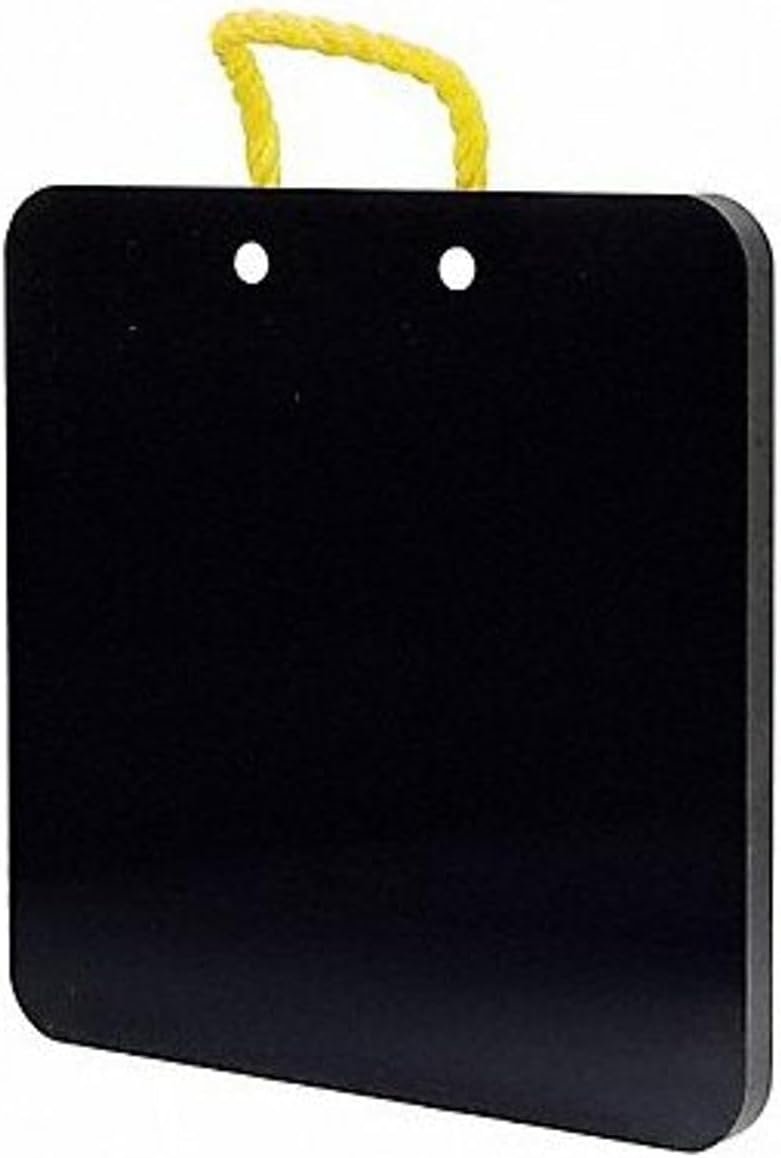
The Buyers Products OP24X24P HDPE Poly Outrigger Pad is a square polymer pad designed for this type of application. It measures 24 inches by 24 inches and is 1 inch thick, and it is constructed from high-density polyethylene (HDPE). Buyers Products identifies the pad for applications involving utility trucks, small aerial lifts, tree-trimming equipment, cranes, and other heavy equipment. The manufacturer also describes the material as a lightweight alternative to rubber and notes that the pad incorporates a rope-style handle for carrying and positioning.
An outrigger pad is a relatively simple piece of equipment, but selecting one involves more than looking at its dimensions. Ground conditions, equipment weight, outrigger configuration, surface type, manufacturer requirements, and the expected load all matter. The pad itself should not be treated as a substitute for proper equipment operation, engineering calculations, or the manufacturer’s instructions.
This guide explains what the OP24X24P is, how an HDPE outrigger pad works, where this type of pad can be useful, and what operators should consider before incorporating one into a work setup.
What Is an Outrigger Pad?
An outrigger pad is a support accessory placed beneath an outrigger, stabilizer, jack, or similar load-bearing component. Its primary purpose is to provide a broader contact area between the equipment and the supporting surface.
Without an appropriate pad, an outrigger foot may place concentrated pressure on a relatively small section of pavement or concrete. A larger pad spreads that contact over a greater area. This can be particularly relevant when equipment is operating on finished surfaces where concentrated loads could contribute to surface damage.
The concept is similar to placing a broad support under a load rather than allowing a narrow support point to bear directly against the ground. The effectiveness of this arrangement depends on many factors, including the characteristics of the pad, the supporting surface, and the actual load.
The OP24X24P provides a 24-by-24-inch square footprint. Its one-inch thickness provides a rigid polymer support surface while keeping the pad considerably thinner than some heavier rubber or specialty support products.
Buyers Products lists the OP24X24P as part of its High Density Poly Outrigger Pad range. The manufacturer also offers different dimensions and thicknesses, including an 18-by-18-inch one-inch model and a 24-by-24-inch 1.5-inch model.
Key Features of the Buyers Products OP24X24P
24 x 24 Inch Footprint
The most noticeable characteristic of the OP24X24P is its square 24 x 24-inch footprint.
A 24-inch square provides considerably more surface area than the small foot of many stabilizers or jacks. In practical terms, the pad creates a larger interface between the equipment and the supporting surface.
That larger footprint can be useful when an operator needs to distribute support forces across a broader area. However, the pad’s dimensions alone do not establish whether it is appropriate for a particular load. The actual load, ground conditions, equipment configuration, and applicable manufacturer specifications must still be considered.
One-Inch Thickness
The pad is 1 inch thick. This provides a relatively substantial polymer support layer while keeping the product manageable compared with significantly thicker specialty pads.
Thickness can matter when considering storage, transportation, clearance, and handling. A one-inch pad may also be easier to position in confined equipment compartments than a much thicker support product.
The OP24X24P should nevertheless be selected according to the requirements of the equipment rather than simply because its dimensions are convenient.
HDPE Construction
The pad is made from high-density polyethylene, commonly abbreviated as HDPE.
HDPE is a thermoplastic polymer widely used in industrial, transportation, construction, and outdoor applications. For an outrigger pad, one of the practical advantages of a polymer construction is the combination of a rigid support surface with a comparatively manageable weight.
Buyers Products describes its high-density polymer pads as a lightweight alternative to rubber.
This distinction can be useful for crews that frequently reposition pads throughout a workday. Material selection is still only one part of the decision, however. Different pad materials can behave differently under load, temperature, surface conditions, and repeated use.
Built-In Rope-Style Handle
The OP24X24P incorporates a rope-style handle.
A handle may seem like a small detail, but it can make a noticeable difference when an operator needs to move a large square pad into position. A 24-inch pad is much larger than many conventional hand-carried accessories, so having a dedicated grip provides a practical way to transport or reposition it.
Buyers Products specifically identifies the rope-style handle as an easy-grab carrying feature.
The handle is primarily a handling aid. It should not be interpreted as a lifting attachment for machinery or as an indication that the pad can be moved while supporting a load.
Black Finish
The OP24X24P is supplied in black. The dark finish is typical of many industrial polymer support products and provides a straightforward appearance suited to utility, construction, transportation, and equipment applications.
Individual Pad Configuration
Retailer specifications indicate that the OP24X24P is supplied as an individual pad.
This is worth considering when planning an equipment setup. A machine using multiple outriggers may require multiple pads, depending on its configuration and the manufacturer’s operating requirements.
How It Can Be Used
Utility Trucks
Utility trucks frequently use stabilizing equipment when workers need a secure working platform or when equipment mounted to the truck requires additional support.
Buyers Products specifically lists utility trucks among the intended applications for its high-density poly outrigger pads.
For these applications, an outrigger pad can provide a broad interface between the stabilizer and the pavement or concrete underneath.
Small Aerial Lifts
Small aerial lifts can use stabilizers or outriggers to improve stability during operation. A suitable support pad may be positioned beneath the stabilizer according to the equipment manufacturer’s instructions.
The 24-inch square footprint can be useful when a larger support area is required and when the available working space permits the pad to be positioned correctly.
Operators should always follow the aerial lift manufacturer’s instructions regarding ground conditions, outrigger deployment, cribbing, pads, and allowable operating configurations.
Tree-Trimming Equipment
Tree-care professionals often operate equipment on driveways, roads, parking areas, lawns, and other mixed surfaces.
Buyers Products identifies tree trimmers as another application for its high-density polymer outrigger pads.
In this environment, protecting finished surfaces can be particularly relevant. A pad provides a separation layer between the equipment’s stabilizer and the surface underneath while distributing the support point over a larger footprint.
Cranes and Heavy Equipment
Outrigger pads are also associated with cranes and other heavy equipment.
Grainger lists the OP24X24P for use with cranes, heavy equipment, tree trimmers, and utility trucks.
For heavier equipment, however, the importance of proper load assessment becomes even greater. A 24-inch square pad should never automatically be assumed to have sufficient capacity for every crane or heavy machine simply because it is marketed for heavy-equipment applications.
Equipment manufacturers and qualified personnel should determine the appropriate support system for the actual operating conditions.
Protecting Finished Surfaces
One of the primary reasons to use an outrigger pad is to help protect surfaces beneath heavy equipment.
Concrete, asphalt, paving stones, and similar surfaces can respond differently to concentrated loads. A broad support pad can distribute contact forces across a larger area than a small outrigger foot.
This does not guarantee that a surface cannot be damaged. Existing cracks, weak subgrades, voids, recently installed pavement, underground structures, drainage systems, and other conditions can affect the result.
A pad should therefore be considered part of a larger ground-support strategy rather than a guarantee against surface damage.
Understanding Load Distribution
Load distribution is one of the most important concepts when using an outrigger pad.
Imagine an outrigger transferring a downward force through a relatively small metal foot. If that foot directly contacts the ground, the force is concentrated over its smaller contact area. Placing a larger pad beneath it creates a larger area over which the force can be transferred.
The basic relationship can be represented conceptually as:
Ground pressure = Load ÷ Supporting area
This does not mean that the actual behavior of a loaded outrigger can be reduced to a simple mathematical calculation. Real-world conditions involve soil strength, pad stiffness, deflection, load distribution, equipment geometry, dynamic forces, and other variables.
Nevertheless, the principle explains why larger support areas are commonly used beneath outriggers.
For the OP24X24P, the nominal square footprint is 24 inches by 24 inches. That corresponds to 576 square inches of geometric surface area before considering the actual contact pattern and deformation of the materials involved.
The relevant load should not be assumed to be distributed perfectly across all 576 square inches under every circumstance. The condition of the surface, the shape of the outrigger foot, and the stiffness of the pad all influence how the load is actually transferred.
Who May Find This Type of Pad Useful?
The OP24X24P may be relevant to several categories of equipment operators and businesses.
Utility and Service Fleets
Companies operating bucket trucks, service trucks, or other vehicles equipped with stabilizers may use outrigger pads as part of their standard field equipment.
The integrated handle can be particularly useful for technicians who need to position support pads repeatedly at different job locations.
Tree-Care Professionals
Tree-care operations can involve heavy equipment positioned on driveways, roads, parking lots, and other surfaces. A broad polymer pad can provide an additional protective layer beneath an outrigger.
Equipment Rental and Service Companies
Rental companies and equipment service providers may need standardized support accessories for machinery that uses outriggers or stabilizers.
The 24-by-24-inch format may be appropriate for certain machines, although compatibility should always be checked against the specific equipment.
Contractors
Contractors working with lifting, access, utility, or support equipment may encounter situations where additional ground-contact area is required.
An outrigger pad can be part of the setup, provided the equipment manufacturer and applicable safety requirements permit its use.
Operators Working Around Finished Property
When heavy equipment is being deployed around finished driveways, parking lots, concrete slabs, or paved areas, protecting the underlying surface may be an important consideration.
The pad is designed specifically with surface protection in mind, according to Buyers Products.
Important Things to Consider Before Using an Outrigger Pad
Verify the Equipment Requirements
Not every machine requires the same type of support pad.
Before using an OP24X24P, check the equipment manufacturer’s operating manual. The manual may specify pad dimensions, materials, minimum support area, ground requirements, or other procedures.
If the equipment manufacturer specifies a particular support configuration, that specification should take priority.
Consider Ground Conditions
A pad placed on weak or unstable ground cannot automatically make the ground suitable for heavy equipment.
Soil composition, moisture, voids, slopes, buried structures, drainage, and previous excavation can all influence ground stability.
A large pad can distribute force over a wider area, but the supporting ground still needs adequate strength.
Inspect the Pad Before Use
Before deployment, inspect the pad for visible damage, excessive wear, cracks, deformation, or other conditions that could affect its use.
The pad should sit appropriately on the supporting surface. Debris, rocks, uneven material, or other objects beneath the pad can change how the load is transferred.
Inspect the Handle
Because the OP24X24P has a rope-style handle, the handle should also be checked periodically for damage or deterioration.
The handle is intended to assist with handling and positioning. It should not be used as a substitute for appropriate lifting equipment when a mechanical lifting method is required.
Think About Storage
A 24-inch square pad takes up meaningful storage space.
Operators who carry multiple pads should consider how they will be secured during transportation. Pads should not be allowed to move freely inside a vehicle or equipment compartment where they could become hazards.
Account for Multiple Outriggers
A machine with several outriggers may require several pads.
The correct number depends on the equipment design and the manufacturer’s instructions. Using only one pad where multiple support points require support would not provide a complete setup.
HDPE vs. Rubber Outrigger Pads
Outrigger pads are available in several materials, including HDPE, rubber, hardwood, and other engineered materials.
The OP24X24P uses HDPE. Buyers Products describes HDPE as a lightweight alternative to rubber in this product category.
HDPE Pads
HDPE pads can provide a combination of rigidity, manageable weight, and durability suitable for many support applications.
They can be attractive when portability is important because the material can offer a practical balance between structural support and handling convenience.
Rubber Pads
Rubber pads are another common category. Rubber can have different surface characteristics and deformation behavior compared with rigid polymer pads.
Some applications may benefit from the characteristics of rubber, while others may favor polymer construction. The choice should be based on the equipment requirements, ground conditions, and intended application rather than on material preference alone.
Hardwood Pads
Hardwood has historically been used for cribbing and support applications. Wood products can have different characteristics related to grain direction, moisture, damage, and repeated use.
A purpose-designed polymer pad may offer different handling and maintenance characteristics.
Thicker Polymer Pads
Buyers Products also lists a 24-by-24-inch polymer pad with a 1.5-inch thickness, identified as model OP242415.
This illustrates why thickness should be considered separately from length and width. A larger or thicker pad is not automatically appropriate for every application; the specific equipment and load requirements determine what is suitable.
Comparing General Outrigger Pad Categories
| Pad Category | Typical Characteristics | Handling Considerations | Main Consideration |
|---|---|---|---|
| HDPE/polymer | Rigid, relatively lightweight, durable | Generally manageable for field handling | Verify load and application requirements |
| Rubber | Flexible and resilient | Weight can vary considerably | Consider deformation and surface conditions |
| Hardwood | Traditional support material | Can be substantial in size and weight | Inspect for damage and material condition |
| Thicker engineered polymer | More material thickness | May be heavier or bulkier | Useful only where specified or appropriate |
This comparison is intended to explain general material categories rather than identify one material as universally superior.
Practical Positioning Considerations
Correct positioning is just as important as selecting the pad.
The pad should generally be positioned so the outrigger or stabilizer foot is properly supported and does not sit near an unstable edge.
The supporting surface should be evaluated before deployment. A pad that extends beyond a pavement edge, sits across a void, or bridges a weak section of ground may not behave as expected.
Operators should also consider slope. Equipment should be positioned and stabilized according to the manufacturer’s instructions rather than attempting to compensate for an unsuitable surface solely through the use of a larger pad.
When working near trenches, excavations, underground utilities, retaining structures, or other potentially weak areas, additional professional assessment may be necessary.
Maintenance and Care
HDPE is generally selected for demanding environments, but no support accessory should be treated as maintenance-free.
After use, inspect the pad for contamination and visible damage. Remove material that could interfere with stable placement during the next use.
Keeping pads reasonably clean also makes it easier to identify cracks, deformation, or other changes.
Storage conditions matter as well. Avoid placing heavy equipment on stored pads for extended periods unless the manufacturer specifically permits such storage. Keep the pads organized so they are easy to inspect before deployment.
Because the OP24X24P is relatively large, secure transportation is also important. A loose 24-inch square pad can move unexpectedly in a vehicle or equipment compartment.
Why Dimensions Matter
The 24-by-24-inch dimensions provide a substantial square footprint, but dimensions should always be considered in relation to the actual machine.
A pad that is too small may not provide the desired support area. A pad that is larger than necessary may be difficult to position or transport.
Thickness also affects handling and physical characteristics. The OP24X24P is one inch thick, while Buyers Products offers other configurations, including a 24-by-24-inch 1.5-inch polymer model.
The correct selection therefore depends on more than simply choosing the largest available pad.
Frequently Asked Questions
What are the dimensions of the Buyers Products OP24X24P?
The OP24X24P measures 24 inches long, 24 inches wide, and 1 inch thick. Retailer specifications identify it as a square HDPE outrigger pad.
What material is the OP24X24P made from?
The pad is made from high-density polyethylene (HDPE). Buyers Products describes its high-density polymer construction as a lightweight alternative to rubber.
Does the OP24X24P have a handle?
Yes. The pad has an integrated rope-style handle designed to make carrying and positioning easier.
What equipment can use an OP24X24P?
Buyers Products identifies utility trucks, small aerial lifts, tree trimmers, cranes, and other heavy equipment among the applications for its high-density polymer outrigger pads.
The exact suitability depends on the equipment manufacturer’s requirements and the conditions at the work site.
Can the OP24X24P protect concrete and pavement?
The product is specifically designed to help protect concrete, paved, and other surfaces from the impact and concentrated support forces associated with heavy equipment.
However, using an outrigger pad does not guarantee that a surface will remain undamaged. The condition and strength of the supporting surface remain important.
Is the OP24X24P a replacement for proper ground assessment?
No. An outrigger pad is a support accessory, not a substitute for assessing ground conditions.
Weak soil, voids, trenches, slopes, damaged pavement, or other site conditions can create hazards regardless of pad size.
Is a 24-by-24-inch pad suitable for every crane?
No. Crane and heavy-equipment requirements vary substantially.
The appropriate pad must be selected according to the machine’s load requirements, manufacturer’s instructions, ground conditions, and applicable safety procedures. A pad’s physical dimensions alone do not establish its suitability for a particular crane.
How many pads are needed?
The required quantity depends on the equipment configuration.
If a machine has multiple outriggers, each support point may require an appropriate pad. Follow the equipment manufacturer’s instructions rather than assuming that one pad is sufficient for the entire machine.
How should the pad be positioned?
The pad should be placed on an appropriate supporting surface and positioned so that the outrigger or stabilizer foot is properly supported.
Avoid unstable edges, obvious voids, loose debris, and unsuitable ground. Follow the machine manufacturer’s setup procedure.
Is HDPE the same as rubber?
No. HDPE and rubber are different materials with different physical properties.
Buyers Products describes its HDPE outrigger pads as a lightweight alternative to rubber.
The appropriate material depends on the application and equipment requirements.
Is the rope handle designed for lifting the pad with machinery?
The rope-style handle is intended to help users carry and maneuver the pad. It should not automatically be treated as a rated lifting point for mechanical lifting equipment.
For mechanical handling, use an appropriate lifting method designed and rated for the task.
What should be checked before using an outrigger pad?
Inspect the pad for visible damage, deformation, cracks, or other abnormalities. Check the handle as well, and make sure the supporting surface is suitable and free from conditions that could interfere with stable placement.
Conclusion
The Buyers Products OP24X24P HDPE Poly Outrigger Pad is a 24-by-24-inch, one-inch-thick polymer support pad designed for use beneath outriggers and stabilizing equipment. Its HDPE construction, square footprint, and rope-style carrying handle make it a practical format for applications involving utility trucks, tree-trimming equipment, aerial lifts, cranes, and other heavy equipment.
The most important point when considering an outrigger pad is that the accessory is only one part of a safe equipment setup. Pad dimensions, material, ground conditions, equipment weight, outrigger configuration, surface type, and manufacturer instructions all need to be considered together.
For operators who regularly work on concrete, paved surfaces, or other finished areas, a broad support pad can be an important part of the equipment setup. The 24-by-24-inch footprint provides a substantially larger contact area than a typical small stabilizer foot, while the HDPE construction offers a comparatively manageable alternative to heavier support materials.
At the same time, the OP24X24P should not be selected simply because its dimensions appear suitable. Heavy equipment creates highly variable loads, and the actual ground-support requirements can differ considerably between machines and job sites. When there is uncertainty about load capacity, ground stability, or the appropriate support configuration, the equipment manufacturer’s guidance and qualified professional assessment should take precedence.
If the dimensions and construction match the requirements of your equipment and work environment,
you can check more details on Amazon here.
As an Amazon Associate, we earn from qualifying purchases.
Leave a Reply